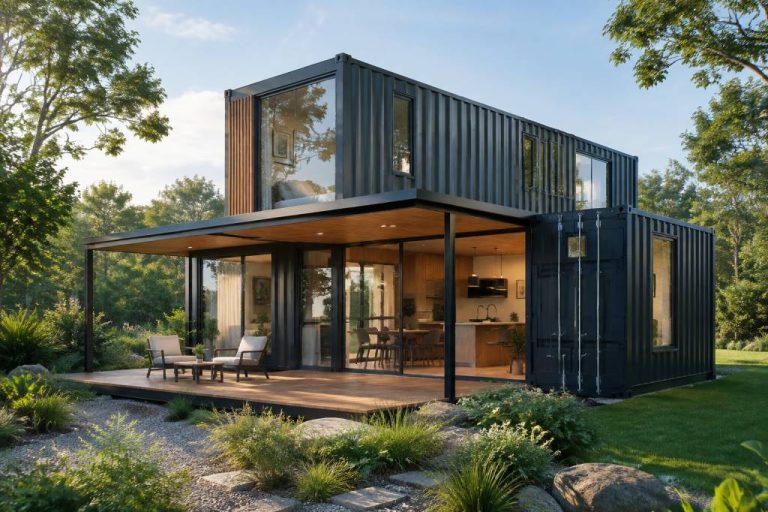
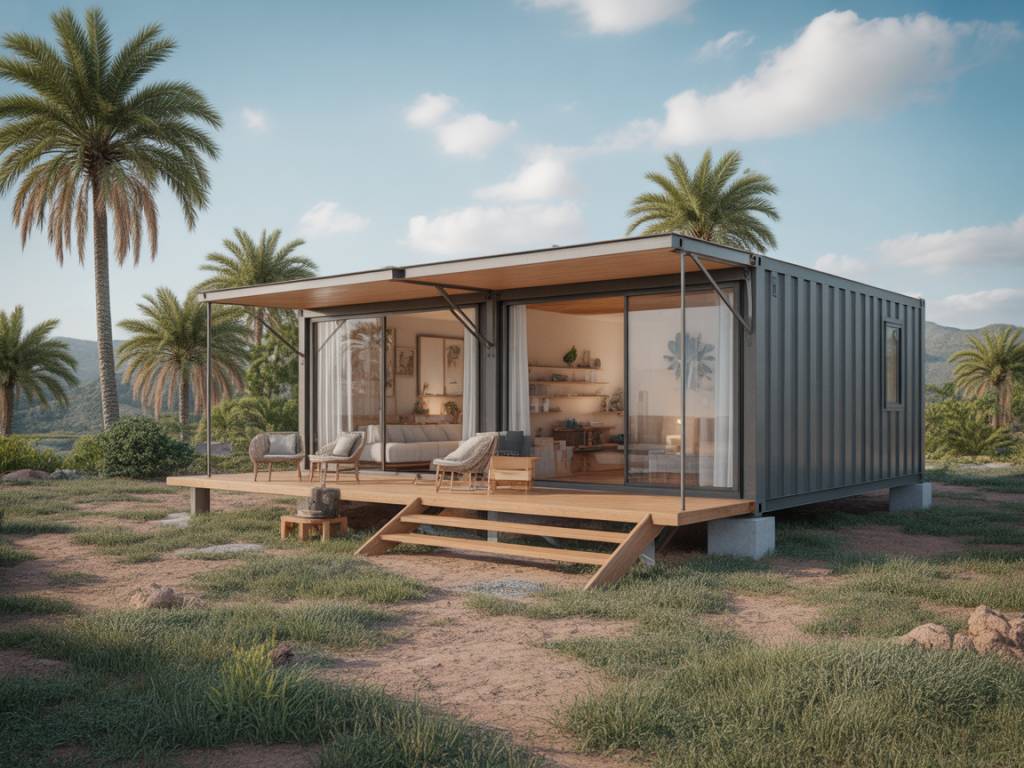
Designing passive cooling systems for container homes in hot climates
Understanding Passive Cooling in Container Homes
Designing passive cooling systems for container homes in hot climates requires a clear understanding of how metal structures behave under intense heat. Shipping containers are strong, modular, and visually distinctive, but they also respond quickly to outdoor temperatures. Steel absorbs solar radiation fast, stores heat, and transfers it indoors unless the building envelope is carefully designed. This is why passive cooling is not an optional upgrade. It is a fundamental part of making a container home comfortable, efficient, and livable in hot weather.
Passive cooling refers to strategies that reduce indoor temperatures without relying heavily on mechanical air conditioning. In container homes, these strategies are especially important because the narrow profile, conductive metal walls, and roof exposure can create rapid overheating. A well-planned design can reduce heat gain, encourage air movement, and support a stable indoor environment throughout the day. The best results usually come from combining several techniques rather than depending on a single solution.
Why Container Homes Overheat in Hot Climates
Container homes often overheat because the exterior surface is made of steel, which is highly conductive. Sunlight hits the roof and walls, and the heat quickly moves through the structure. If the home sits directly on a hot surface, such as concrete or compacted soil, the floor can also absorb and radiate heat indoors. Small interior volumes make the problem more noticeable, especially when multiple people, appliances, and humidity contribute additional warmth.
Another issue is the limited wall depth. Traditional homes often have thicker assemblies that accommodate insulation, ventilation gaps, and thermal breaks. A shipping container has a slimmer profile, so every layer must be planned carefully. If insulation is poorly installed or thermal bridges are ignored, hot spots can form quickly. Windows can also intensify the problem if they are not shaded, properly oriented, or equipped with high-performance glazing.
Site Orientation and Building Placement
The first and often most effective passive cooling decision begins before construction starts: placement on the site. Orientation determines how much direct sun the home receives during the hottest hours. In hot climates, the goal is usually to minimize large west-facing openings, because afternoon sun can be intense and difficult to control. South-facing facades may also require strong shading depending on the hemisphere and seasonal sun path.
Whenever possible, the long axis of the container should be aligned to reduce solar exposure on the most vulnerable sides. This simple move can lower cooling demand significantly. It also helps to place the home where prevailing breezes can move across the site. A container home that captures natural airflow is much easier to cool than one placed in a stagnant, sunbaked corner.
- Orient the home to reduce direct afternoon sun on large walls.
- Use the site’s natural wind patterns to support cross ventilation.
- Avoid placing the container directly on heat-absorbing ground without a proper base.
- Preserve shade from existing trees when feasible and safe.
Shading Strategies for Roofs and Walls
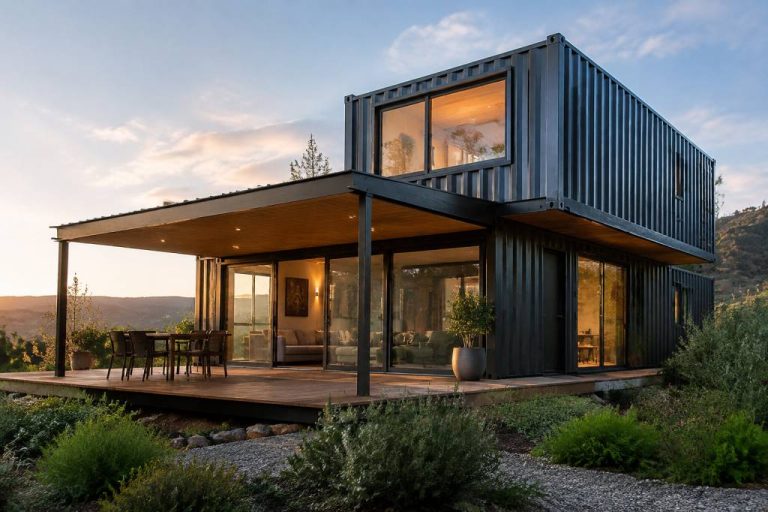
Shading is one of the most powerful passive cooling strategies for container homes in hot climates. Since steel roofs can become extremely hot under direct sun, a shaded roof can make a dramatic difference in indoor comfort. A secondary roof structure, often called a “cool roof” or shade roof, creates a ventilated air gap that reduces heat transfer into the living space. This approach is especially effective because the roof is usually the largest single source of heat gain.
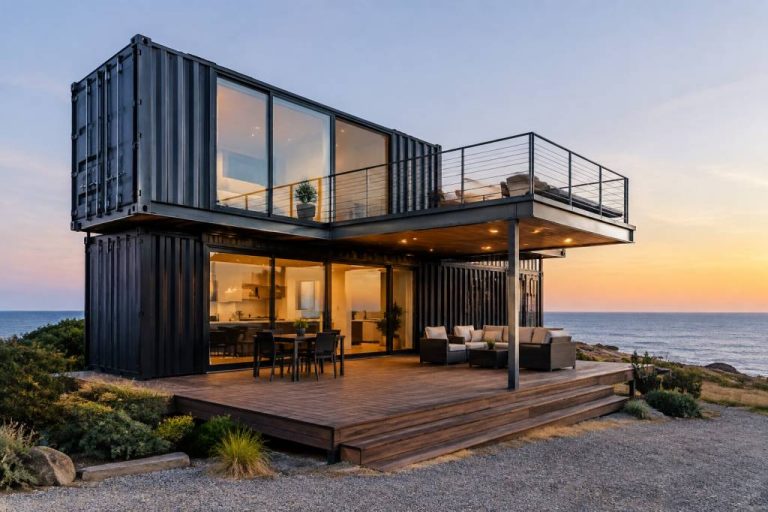
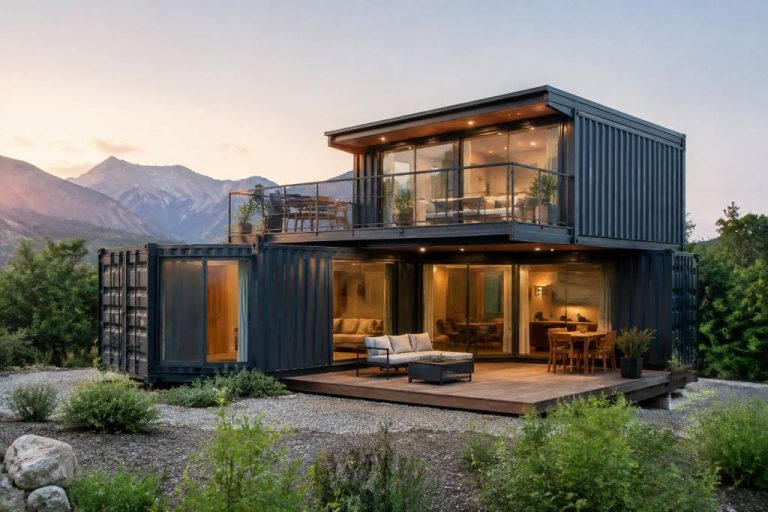
Exterior shading for walls and windows also matters. Deep overhangs, pergolas, louvers, awnings, and trellises can filter sunlight before it reaches the building envelope. These elements are not only functional. They also improve the visual character of the home, making the industrial container form feel softer and more residential. In extremely hot regions, vertical shading on east and west walls can be particularly valuable because low-angle sun is harder to block with roof overhangs alone.
- Install a ventilated secondary roof above the container roof.
- Use adjustable louvers or fixed fins on exposed windows.
- Add pergolas or vine-covered structures to reduce solar load.
- Combine shading with light-colored exterior finishes for better performance.
Insulation and Thermal Breaks
Good insulation is essential, but in container homes it must be specified and installed with care. The objective is to slow heat transfer while avoiding moisture problems. In hot climates, insulation helps keep outdoor heat out, but it must work alongside ventilation and shading. Spray foam, rigid board insulation, mineral wool, and hybrid assemblies are commonly used, depending on budget and design goals. Each has strengths and limitations, and the right choice depends on climate, wall assembly, and local building codes.
Thermal bridging is a major concern in metal structures. The steel shell can create direct conductive paths that bypass insulation. Without thermal breaks, the home can still gain heat through framing members, fasteners, and structural connections. That is why detailed envelope design matters so much. Continuous insulation layers, insulated furring systems, and careful treatment around window openings all improve the thermal performance of the finished home.
It is also important to address the roof assembly separately. The roof receives more direct solar radiation than the walls, so insulation levels there should be at least as strong, and often stronger. Reflective roof coatings can help, but they should not replace actual insulation. A layered strategy delivers much better results.
Natural Ventilation and Cross Breezes
Natural ventilation is one of the most valuable passive cooling tools available to container homeowners. When outdoor air is cooler than indoor air, or when movement of air increases comfort through evaporation, opening up the building can significantly reduce the need for mechanical cooling. Container homes can be especially suitable for cross ventilation because their narrow width makes it easier for air to travel from one side to the other.
To maximize airflow, windows and openings should be positioned on opposite sides of the interior. High and low openings can also support stack effect, allowing warm air to rise and escape while cooler air enters below. Ceiling vents, clerestory windows, and operable skylights can support this movement. However, ventilation works best when the home is shaded and protected from excessive solar gain. Otherwise, moving hot air around will not solve the underlying temperature problem.
- Place operable windows on opposing walls for cross ventilation.
- Use higher openings to exhaust rising warm air.
- Design interior partitions to avoid blocking airflow paths.
- Install insect screens so windows can remain open longer.
Window Design for Hot Weather Performance
Windows can either improve passive cooling or undermine it. Large expanses of glass without shading can turn a container home into a greenhouse. For hot climates, window placement, size, glazing type, and exterior protection should all be considered together. Smaller openings on the hottest sides of the home are often more effective, while well-placed windows on shaded elevations can deliver daylight and ventilation without excessive heat.
Low-emissivity glazing, solar-control glass, and insulated frames can improve performance, but they are most effective when combined with external shading. Interior blinds help with glare, yet they stop sunlight after it has already entered the home and transferred some heat indoors. Exterior shading is generally better because it blocks solar radiation before it penetrates the glass. This is a small detail with a large impact.
Cool Roofs, Reflective Surfaces, and Exterior Finishes
Container homes in hot climates benefit greatly from light-colored and reflective exterior finishes. A dark steel roof can absorb enormous amounts of heat, while a lighter roof surface reflects more solar energy and stays cooler. Cool roof coatings are widely used because they can reduce rooftop temperatures and lower the amount of heat transferred into the home. The same principle applies to exterior wall colors, although the roof remains the priority.
Painted finishes should be selected for durability as well as reflectivity. In coastal or humid hot climates, corrosion resistance also becomes important. A high-performance coating system can protect the steel shell while improving passive cooling. Some owners also use exterior cladding or rainscreen systems, which create a ventilated buffer zone around the container and help prevent heat from entering directly through the metal skin.
Landscaping as a Passive Cooling Tool
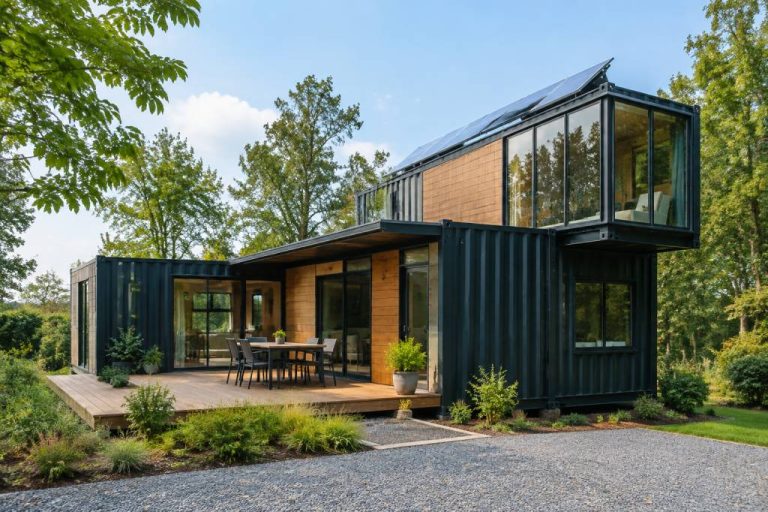
Landscaping is often overlooked, but it can make a major difference in the thermal comfort of a container home. Trees, shrubs, and vines create shade, lower surrounding surface temperatures, and improve microclimate conditions around the building. In hot, dry regions, strategic planting can reduce reflected heat from bare ground and concrete surfaces. In humid regions, vegetation can also support airflow if it is arranged carefully.
Hardscape materials should be chosen thoughtfully. Pale gravel, permeable paving, and shaded patios are better than broad dark surfaces that store and radiate heat. If the home includes decks, breezeways, or outdoor living areas, these spaces can serve as buffer zones that reduce direct solar exposure on the container itself. In this way, landscaping is not just decorative. It becomes part of the cooling system.
- Plant deciduous trees where seasonal shade is beneficial.
- Use vines on trellises to shade walls and outdoor spaces.
- Choose permeable, light-colored ground materials when possible.
- Create shaded transition zones around doors and windows.
Interior Layout and Heat Management
The interior plan of a container home can either help or hinder passive cooling. Since space is limited, layout choices affect airflow, heat accumulation, and occupant comfort. Kitchens, laundry appliances, and mechanical equipment should be grouped carefully because they generate heat. If possible, heat-producing functions should be placed where ventilation is strongest or isolated from sleeping areas.
Ceiling height also matters. Raised roofs, partial lofts, and vaulted insertions can improve thermal comfort by increasing air volume and allowing hot air to rise above the occupied zone. Even in compact container homes, small changes to volume and circulation can create a noticeable difference. The key is to avoid trapping heat in dead zones or allowing it to accumulate in poorly ventilated corners.
Combining Passive Systems for Best Results
No single passive cooling method is enough for every hot climate. The most effective container homes combine several strategies into one integrated design. Site orientation, external shading, insulation, reflective finishes, natural ventilation, and landscaping all work together. When these systems are coordinated from the beginning, the home can stay cooler with far less reliance on air conditioning.
This integrated approach is also more economical over time. Although some passive cooling upgrades increase upfront construction cost, they can reduce energy use, maintenance, and long-term strain on HVAC systems. For buyers and builders, that means better comfort and often better value. A thoughtfully designed container home should feel like a shelter from heat, not a metal box that stores it.
Planning a Hot-Climate Container Home with Comfort in Mind
Designing passive cooling systems for container homes in hot climates is a technical challenge, but it is also an opportunity to create a more resilient and efficient home. The steel shell offers strength and modular flexibility, yet it needs careful treatment to perform well in intense sun and high temperatures. A successful design respects the realities of heat gain and responds with layered solutions that are simple, durable, and climate-specific.
Builders, architects, and homeowners who prioritize passive cooling tend to achieve better comfort and lower energy bills. They also create homes that are easier to live in during peak summer conditions. For anyone considering a container home in a warm region, passive cooling should be treated as part of the foundation of the project, not as an afterthought. It shapes the experience of the home from the first day of occupancy and continues to influence performance for years.
À propos de l'auteur