


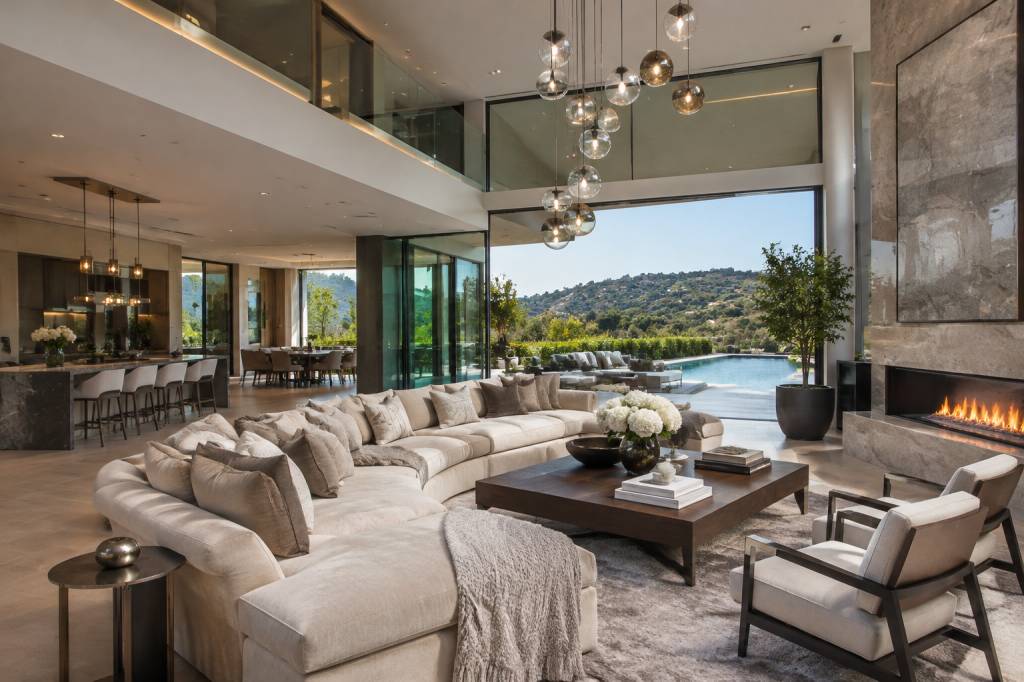
Celebrity homes are often presented as collections of spectacular rooms: a dramatic kitchen, a spa-like bathroom, a cinema hidden behind a door. But the most interesting interiors are not simply expensive. They show how architecture, materials, light and daily routines work together—and where design decisions create practical trade-offs.
For readers interested in container houses and other modular buildings, there is a useful question behind the glossy photographs: which ideas depend on a huge budget, and which can be adapted to a smaller, more constrained home? A well-planned view, a carefully chosen surface or a flexible room can matter more than imported stone or a famous designer’s name.
Graceland’s Jungle Room: a room with a strong identity
Elvis Presley’s Jungle Room at Graceland is one of the best-known examples of a celebrity interior with a distinctive theme. Its dense green carpet, carved wood furniture and tropical styling make it instantly recognizable. The room was not designed to disappear into the background. It was meant to feel different from the more formal spaces elsewhere in the house.
That clear identity is a useful design lesson. A compact home can benefit from one room with a strong material or color scheme, provided the rest of the interior gives the eye somewhere to rest. In a container home, where a limited floor area can make every surface visible at once, repeating an intense pattern throughout may feel overwhelming. A single feature wall, textured ceiling or carefully selected piece of furniture can create character without reducing visual space.
There is also a practical point: richly textured surfaces collect dust and can be harder to maintain. In a high-traffic home, choose finishes according to how they will be cleaned, not only how they look in photographs. The right question is not simply, “Does this feel luxurious?” It is, “Will it still work after a year of everyday use?”
Frank Sinatra’s Twin Palms: architecture and interior as one idea
Frank Sinatra’s Palm Springs home, known as Twin Palms, was designed by architect E. Stewart Williams and completed in 1947. The house is closely associated with the clean lines and indoor-outdoor living of mid-century modern design. Its piano-shaped swimming pool is among its most recognizable features, while the architecture connects the interior to the desert landscape.
The lasting appeal is not just the pool. It is the relationship between the building, its openings and its setting. Large windows and direct access to outdoor areas can make a room feel more expansive, but they also affect heat gain, glare, privacy and energy use. In a container home, adding glazing can be especially tempting because the structure often begins as a narrow, enclosed steel shell. Yet cutting large openings requires structural planning and reinforcement; it is not a cosmetic change.
Before enlarging a window, consider orientation, shading and the local climate. External blinds, roof overhangs or deciduous planting can reduce summer heat, while well-specified glazing helps limit heat loss in colder conditions. A view is a genuine design asset, but it should not come at the cost of an uncomfortable room or an overstretched structure.
Jennifer Aniston’s Bel Air home: warm minimalism, not empty minimalism
Jennifer Aniston’s former Bel Air home has been widely featured in design coverage for its modern architecture, warm materials and connection to landscaped outdoor areas. Public descriptions of the property emphasize a restrained palette and a relaxed, indoor-outdoor character rather than a display of ornate finishes. The important distinction is that minimalism does not have to mean a blank room.
Warmth can come from a combination of wood, natural textures, soft lighting and furniture scaled to the space. In a smaller modular home, a limited palette can make adjoining areas feel connected. But using only hard, smooth finishes may create an echoing, clinical interior. Rugs, curtains, acoustic panels and upholstered furniture help absorb sound as well as add texture.
Wood requires particular care in a container building. It can bring visual warmth, but the wall assembly behind it must still manage moisture and temperature. A decorative timber lining is not a substitute for a correctly designed insulation system, ventilation and vapor control. The layers should be planned together so that a stylish interior does not conceal a condensation problem.
What celebrity kitchens reveal about layout
Luxury kitchens tend to photograph well because they have generous worktops, clear sightlines and carefully controlled storage. The useful lesson is not that every home needs a professional-grade range or a stone island. It is that a kitchen works best when movement, preparation and storage are considered together.
In a narrow container home, a large island can block circulation and consume the very floor area it is meant to improve. A peninsula, wall-mounted table or compact mobile island may provide a work surface without permanently dividing the room. Full-height cabinets can use vertical space, but they should be balanced with open areas or lighter finishes to avoid making the kitchen feel compressed.
Before selecting appliances, check their dimensions, ventilation requirements and electrical loads. Compact appliances can reduce space demands, but not every small model offers the capacity or serviceability a household needs. Measure the route from delivery access to the kitchen, too. A refrigerator that fits on a plan may still be difficult to move through a narrow doorway.
Bathrooms: the luxury look depends on the hidden work
Celebrity bathrooms often feature generous showers, freestanding tubs, natural stone and integrated storage. These images can make a large, spa-style bathroom seem like a straightforward upgrade. In reality, bathrooms depend on careful waterproofing, drainage, ventilation and maintenance—issues that become more noticeable in compact buildings.
For a small footprint, a walk-in shower with a fixed glass screen may feel more open than a bulky enclosure, while a wall-hung vanity can leave more visible floor area. Large-format tiles reduce the number of grout joints, but they require an even substrate and skilled installation. Natural stone can be beautiful, yet some types need sealing and are sensitive to acidic cleaners. Porcelain often offers a lower-maintenance alternative with a similar appearance.
In a container home, bathroom location should be considered early because it affects plumbing routes and the layout of the rest of the building. Keeping wet areas near one another can simplify pipework, but it should not compromise access, storage or privacy. A powerful extractor fan, correctly ducted to the outside, is a functional upgrade that may do more for long-term comfort than a costly decorative finish.
Private cinemas, hidden rooms and the value of flexible space
Some celebrity properties include home cinemas, recording rooms or concealed doors leading to private spaces. These features are compelling, but they also raise practical questions. A dedicated cinema needs acoustic separation, lighting control, ventilation and enough room for comfortable seating. Equipment generates heat, and sound can travel through lightweight walls more easily than many owners expect.
For most households, a flexible room is a better investment than a single-purpose space. A den can serve as a guest room, office and media room at different times. Fold-down beds, sliding partitions and built-in storage can support these changes, although moving parts should be durable and easy to operate. A sliding door may save swing space, but it usually provides less sound privacy than a well-sealed hinged door.
In a modular building, flexibility should be designed around the structure rather than added as an afterthought. Mark out furniture and circulation zones before finalizing partition locations. This simple step can reveal whether a sofa, desk or bed will obstruct a door or reduce access to storage.
Materials that look luxurious—and materials that perform
High-end interiors often use stone, timber, metal and glass to create contrast. These materials can also be selected for performance, but the choice should match the job. Stone is durable and has thermal mass, yet it is heavy and may increase structural demands. Timber is warm and adaptable, but its performance depends on species, finish and exposure. Metal can be robust, although it may feel cold and can transfer heat if used without suitable detailing.
Reclaimed materials may add character and reduce demand for newly manufactured products, but reuse is not automatically simple. Check a material’s condition, treatment history, dimensions and suitability for its intended location. Reclaimed timber, for example, may contain old fixings or coatings that need specialist handling. A reused product still needs to meet current safety and building requirements.
For container homes, the exterior steel shell and interior finishes must be considered as parts of one envelope. Insulation, thermal bridging, ventilation and moisture control influence comfort and durability. A premium finish cannot compensate for a poorly designed wall assembly. Before choosing interior materials, confirm how the insulation system will be installed and how services will pass through it.
How to borrow the ideas without copying the budget
The value of celebrity interiors is in the design decisions that can be adapted, not in trying to reproduce a specific mansion. A practical approach is to identify what makes a room work, then translate that principle to the available space and budget.
-
Choose one focal point. A distinctive light, material or view can give a room identity without filling every surface with visual detail.
-
Plan circulation first. Check door swings, furniture clearances and access to storage before ordering cabinetry or appliances.
-
Match finishes to use. A surface in a bathroom or kitchen needs to tolerate moisture, cleaning and frequent contact.
-
Coordinate structure and services. Large windows, heavy finishes and concealed equipment can affect reinforcement, wiring, plumbing and ventilation.
-
Budget for installation and upkeep. The purchase price is only part of the cost. Include labor, preparation, sealing, repairs and replacement.
Celebrity homes are useful case studies when they are treated as buildings rather than mood boards. Graceland shows how a strong theme can make a room memorable. Twin Palms demonstrates the effect of connecting architecture to its landscape. Modern Bel Air interiors show how restrained materials can still feel warm. The same principles can work in a much smaller home, but only when layout, climate, structure and maintenance are taken seriously.