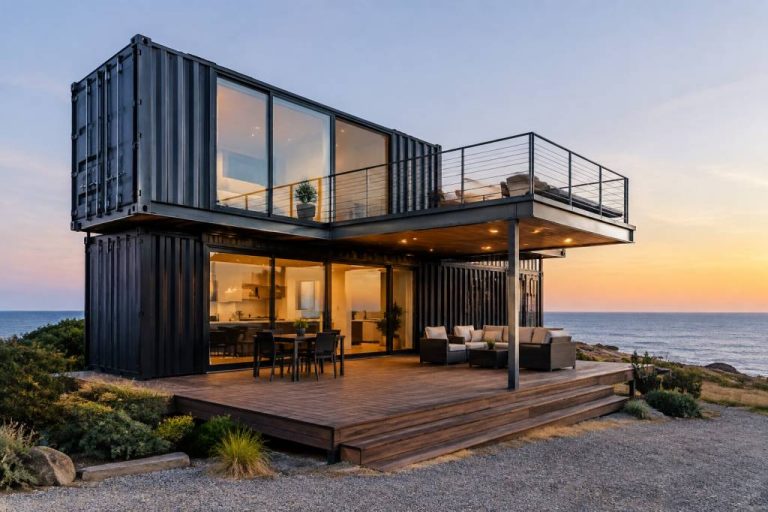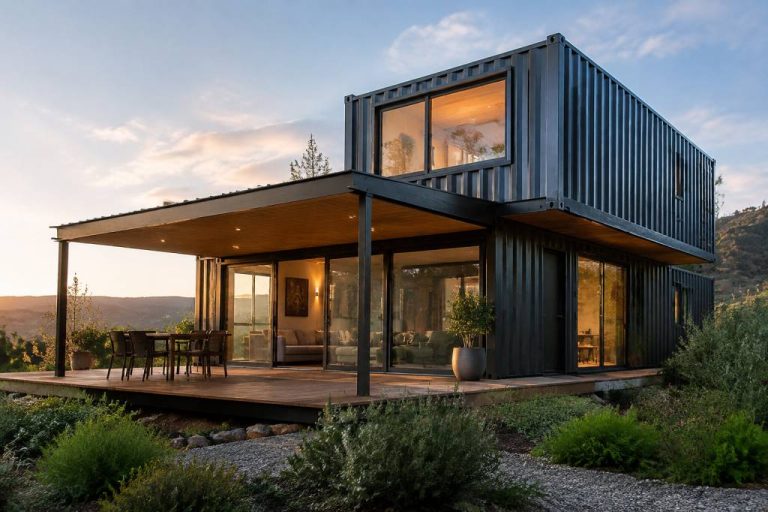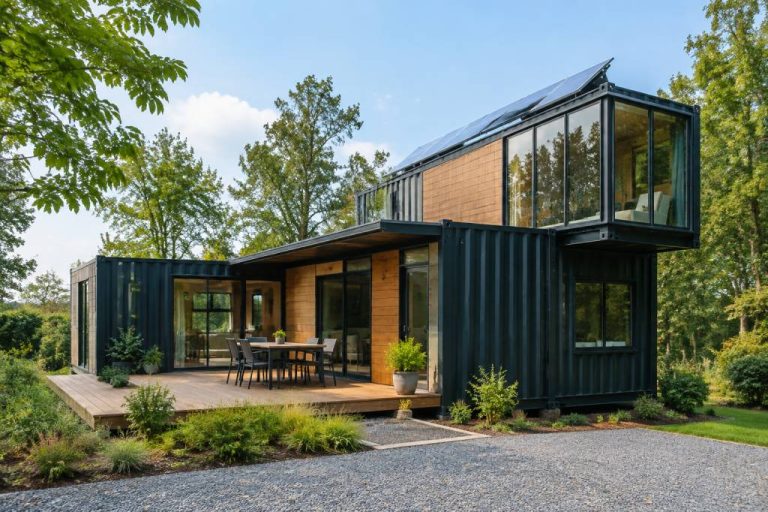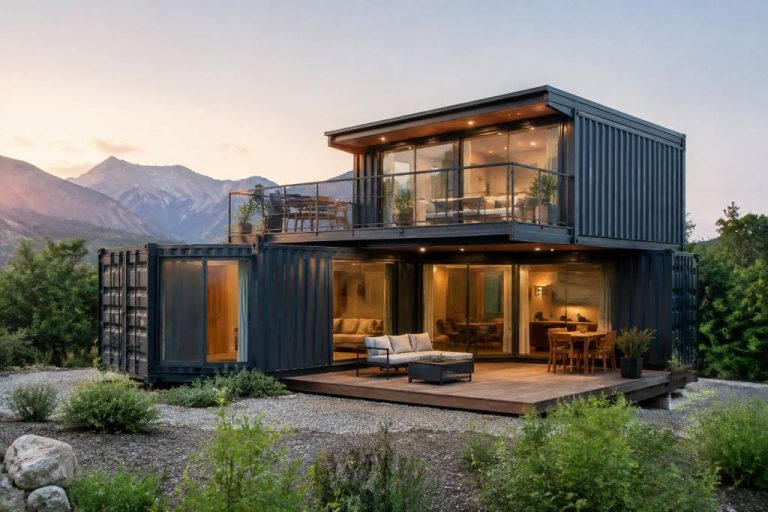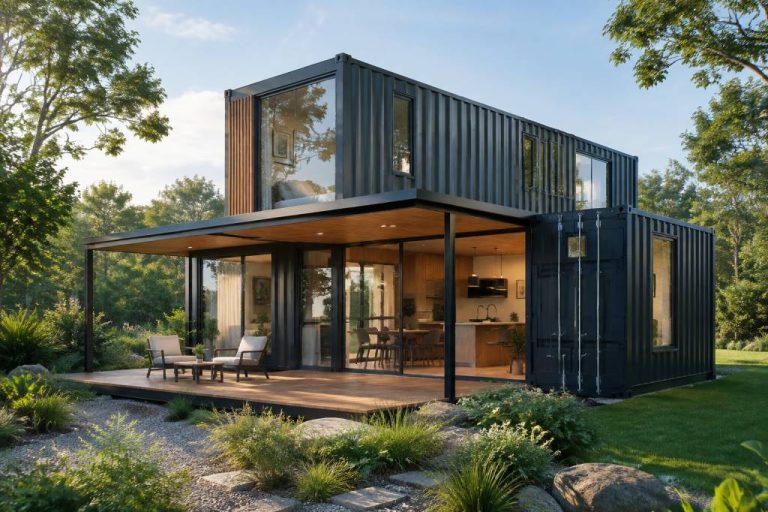

Recycled materials that transform the look and feel of container architecture
Container architecture has already broken one rule: a house does not have to start from a traditional masonry shell. The next logical step is to question the rest of the materials. If the structure is a recycled steel box, why should the cladding, insulation or interior finishes be brand new?
In practice, recycled and upcycled materials do much more than “greenwash” a container project. They can radically change the perception of the metal box: softer acoustics, warmer tactility, better thermal comfort and a visual identity that has nothing to do with anonymous logistics yards.
Below is a tour of the materials that are currently making the biggest difference on real container builds: what they change in terms of look and feel, what they cost, and what you need to watch out for on site.
Why recycled materials make particular sense for containers
Container architecture starts with a paradox: you save CO₂ and resources by reusing a surplus industrial product, but you risk cancelling part of that benefit with intensive new materials for insulation, cladding and interior fit-out.
Recycled materials help restore that balance. They fit container projects for three specific reasons:
- High embodied carbon of steel shell: A 40 ft high-cube container represents roughly 3–4 tonnes of steel. Using recycled or low-impact materials elsewhere is one of the few levers you have to compensate.
- Thin walls, high performance needs: Because steel conducts heat and sound very efficiently, every layer you add matters. Recycled materials can bring thermal and acoustic mass without overweighting the budget.
- Modular geometry: The repetitive dimensions of containers (panel widths, door sizes, apertures) align surprisingly well with many reclaimed and factory offcut products.
In other words, if there is one typology where you can really “feel” the effect of recycled finishes, it is the metal box you are trying to turn into a home or office.
Recycled steel and structural elements: starting with the frame
It sounds obvious, but many “container homes” are still built from newly manufactured container-sized steel modules, not decommissioned shipping units. That is the first decision to scrutinise.
Using genuine second-hand ISO containers (typically “one-trip” or older) does two things to the architect’s palette:
- Visual identity: Keeping a portion of the corrugated weathered steel visible, even if sandblasted and repainted, anchors the project in its industrial origin. Paired with warmer recycled claddings, this contrast is powerful.
- Budget balance: A used 40 ft high-cube is commonly in the 2,500–4,500 € range in Europe or North America, depending on year and condition. Savings here can be redirected to better-performing recycled insulation or high-quality reclaimed timber.
Where additional structure is required (cantilevers, stacked configurations, long-span openings), many teams are now specifying secondary frames made from reclaimed steel sections rather than virgin I-beams. Old industrial buildings, deconstructed warehouses and bridge refurbishments are typical sources.
The design implications are practical:
- Engineering: Reclaimed steel beams must be re-graded or conservatively assessed. Most structural engineers will work with mill test reports if available, or apply reduction factors.
- Fabrication: Expect more on-site cutting, derusting and drilling. On the positive side, patinated beams and columns left visible indoors can become a strong aesthetic statement.
At the smaller scale, recycled steel also shows up in staircases, guardrails and mezzanines. Using offcuts and standardised lengths of reclaimed profiles fits well with the orthogonal geometry of containers.
Exterior cladding: from pallets to composite waste
The fastest way to make a container stop looking like a container is to change its skin. Recycled claddings are where that transformation is most visible.
1. Reclaimed timber cladding
Arguably the most common move: wrap a steel box in old wood. Sources include barn siding, scaffolding planks, pallet timber and decommissioned decking.
- Look & feel: Instant warm contrast against steel. Textured, irregular, it reduces the visual “hardness” of the corrugated metal.
- Performance: With a ventilated cavity and proper detailing, reclaimed wood protects the steel, slows overheating and contributes to acoustic damping.
- Constraints: Moisture content, residual nails, fungal attack. Everything must be inspected, de-nailed, planed or brushed, and sometimes re-graded.
On cost, reclaimed boards are not automatically cheaper than new. Labour for selection and preparation can offset material savings. The real gain is environmental and aesthetic, not “budget miracle”.
2. Facades from recycled plastic and composite waste
Several manufacturers now produce facade panels and battens made from 100% recycled plastic or mixed plastic–wood composites. Some are explicitly marketed for container projects because of their light weight and easy fixing patterns.
- Look & feel: Ranges from wood-like to unapologetically synthetic, sometimes with visible chips and flakes of the original waste stream.
- Performance: Very low maintenance, good resistance to splash water and insects. Thermal performance depends on thickness but is usually secondary to the insulation layer behind.
- Risks: UV stability and fire behaviour are the key checks. Ensure proper certifications (e.g. Euroclass ratings) for your jurisdiction.
On dense urban sites where maintenance access is limited, these recycled composites can be more practical than reclaimed timber, while still avoiding virgin PVC sidings.
3. Sheet metal from deconstructed buildings
Corrugated steel sheets salvaged from agricultural sheds or industrial roofs align visually with the container’s language. Using them as secondary skins introduces a subtle layering: old metal over older metal.
The tactile effect is counterintuitive. A double skin with an air gap significantly improves acoustic absorption compared with a single steel wall. Indoors, the container becomes quieter under rain or wind impacts.
Interior finishes: where the “feel” actually changes
The user does not live on the facade; they live inside the box. Here, recycled materials can dramatically change acoustics, thermal comfort and perceived quality.
1. Reclaimed timber for floors and wall linings
Reclaimed hardwood flooring from old schools, factories or gyms is a strong match for containers: high durability, rich character and often available in large quantities with standard thickness.
- Comfort: Timber mitigates the “drum” effect of the metal shell and improves walking comfort compared with bare plywood.
- Thermal feel: Lower thermal conductivity than steel; floor temperature swings are less brutal, especially over insulated subfloors.
- Implementation: Expect more sanding and selective repairs (old nail holes, colour variations). But these imperfections often become part of the interior identity.
For wall linings, thin reclaimed boards or panels (e.g. old workshop cladding) can replace new plasterboard in non-wet rooms, reducing gypsum use and avoiding jointing compounds.
2. Tiles and stone from demolition
Bathrooms and kitchens in containers are typically compact. This makes them good candidates for reused ceramic tiles, quarry offcuts or stone remnants.
- Look & feel: Patchwork tiling or uniform batches from a single demolition can add depth to small spaces. Stone offcuts are particularly effective for worktops.
- Performance: Good durability, easy cleaning, high mass that improves thermal lag in thin-walled volumes.
- Constraints: Irregular pieces mean more cutting and layout time. However, container bathrooms are small enough that labour remains contained.
3. Acoustic panels from recycled fibres
Containers are unforgiving in terms of reverberation. Even with soft furnishings, an open-plan metal box can sound like a canteen. Acoustic panels made from recycled PET bottles, textile fibres or felt offcuts are an efficient corrective.
- Composition: Many products now use 50–100% recycled content, mostly post-consumer PET.
- Effect: Targeted placement on ceilings and upper wall bands can drop reverberation times to levels comparable to traditional houses.
- Installation: Lightweight panels are easy to mechanically fix to secondary battens or directly onto plasterboard linings.
Insulation from recycled sources: beyond “eco-decor”
If there is one layer where recycled materials must earn their place technically, it is insulation. Containers need serious thermal correction; decorative sustainability is not enough here.
1. Cellulose insulation (recycled newspaper)
Cellulose remains one of the best-performing recycled insulations per euro spent.
- Source: Shredded, treated newspaper and paper waste.
- Performance: Thermal conductivity around 0.038–0.040 W/m·K, very good hygrothermal behaviour and decent acoustic absorption.
- Use in containers: Typically blown into stud cavities between interior lining and the steel shell, or dense-packed in service frames added inside.
The main constraint is thickness. To reach standards comparable to new-build regulations in cooler climates, you need 140–200 mm, which can eat into interior width. Strategic use (e.g. maximise roof and north facades) is often the compromise.
2. Wood fibre and recycled timber-based boards
Wood fibre insulations often incorporate sawmill by-products and recycled wood. Available as rigid boards or semi-rigid batts, they are relevant when you want both mass and insulation in a limited thickness.
- Advantages: Good summer comfort (heat capacity), useful in metal skins prone to overheating; compatible with vapour-open constructions.
- Limitations: Heavier than mineral wool, sensitive to liquid water. Detailing against condensation at steel interfaces is critical.
3. Recycled PET and textile-based batts
Insulation made from recycled PET bottles or textile waste (denim, cotton offcuts) is gaining traction in small-scale container projects and DIY builds.
- Advantages: Easy handling (no itching), relatively stable performance, good acoustic properties.
- Checks: Fire ratings, binding agents and long-term creep. Not all products are equal; some are more suited to internal partitions than to external envelopes.
Used intelligently, these insulations can substantially improve interior feel: fewer cold surfaces, more stable temperatures and much better sound isolation from rain and wind noise.
Upcycled elements: doors, windows and “found” components
Once structure, skin and comfort layers are covered, the last lever for changing the perception of a container project lies in the openings and furniture.
1. Reused doors and windows
Architectural salvage yards are full of high-quality timber doors and sometimes triple-glazed windows removed during refurbishments.
- Impact on feel: A solid oak door or old industrial steel-framed window immediately shifts the space away from “prefab cabin” towards “one-off architecture”.
- Technical caveat: Thermal performance of older windows can be poor. In cold climates, it is often better to reuse recent high-performance units than charming single-glazed ones.
From a practical standpoint, container openings are usually cut to fit available frames rather than the reverse. This is a rare case where design can genuinely follow resource.
2. Built-in furniture from industrial leftovers
Desks, benches and kitchen islands made from worktop offcuts, old lab benches, steel trolleys or cable reels are particularly suited to the narrow footprints of containers.
The more the furniture integrates structurally (spanning between walls, incorporating storage under beds), the more it contributes to the perception that the container was “designed this way from the start” instead of adapted post-factum.
Regulations and performance: what you cannot improvise
Recycled materials do not exempt a project from normal building regulations. In many jurisdictions, they attract more scrutiny, not less. Three themes are non-negotiable:
- Fire safety: Reaction-to-fire and resistance classifications must be checked and documented. Timber claddings, textile-based insulations and interior linings all fall under this.
- Moisture and condensation: Steel is unforgiving. Any vapour-permeable strategy must be carefully modelled (e.g. Glaser method or dynamic simulations) to avoid concealed corrosion and mould.
- Structural integrity: Reclaimed structural elements require engineering justification. Informal assumptions (“it looks strong enough”) are not acceptable once you introduce concentrated loads or cantilevers.
Most issues seen on container projects do not come from the recycled nature of materials, but from details rushed to save time. Patience at the specification stage is far cheaper than cutting out rusted walls ten years later.
Three snapshots from the field
Urban infill studio, 1 x 40 ft container, temperate climate
A single high-cube container converted into a backyard studio in a dense European city used:
- Reclaimed barn siding as ventilated timber cladding on three facades.
- Cellulose insulation (160 mm) in walls and 220 mm in a raised timber roof above the container.
- Acoustic PET panels (70% recycled content) on the ceiling.
- Reused triple-glazed window units from an office retrofit.
The result: exterior perception of a small timber pavilion rather than a container, with indoor acoustic comfort high enough for podcast recording. Total extra cost of “recycled upgrades” versus conventional new materials: roughly +8%, largely offset by self-performed prep work on the timber.
Off-grid retreat, 2 x 20 ft containers, warm climate
In a rural site, two containers placed in parallel created a shaded central deck. Materials included:
- Recycled sheet metal from a deconstructed barn as a second ventilated skin.
- Wood fibre batts (120 mm) and ventilated roof overhangs for summer comfort.
- Interior panelling from reclaimed softwood planks, lightly whitewashed.
- Furniture made from decommissioned laboratory benches and steel shelving.
The double metal skin, contrary to expectation, produced a very comfortable interior climate when combined with adequate shading and night ventilation. Visitors often failed to identify the underlying containers.
Multi-unit student housing, 12 containers, cold climate
Here the developer prioritised performance and rapid construction:
- Factory-fitted recycled denim insulation in internal partitions for acoustics.
- Mineral wool with high recycled content for the main envelope (pragmatic compromise where recycled alternatives could not match fire requirements).
- Common areas lined with panels made from compressed recycled textiles and PET.
- Exterior walkways using reclaimed industrial grating.
The project illustrates a key point: “recycled” does not have to mean “everywhere or nothing”. Strategic use in the most visible and most comfort-critical layers already changes the lived experience.
How to specify and source: a simple roadmap
If you are about to start a container project and want recycled materials to genuinely transform it, not just decorate it, a pragmatic sequence is helpful:
- Start with performance targets: Define U-values, acoustic goals and fire ratings. This eliminates incompatible options early.
- Identify local waste streams: Look at what your region is throwing away: pallets, agricultural buildings, office windows, textile waste. This will shape the palette.
- Prioritise “feel” layers: Focus first on interior linings, floors, acoustic treatments and visible claddings. These have the strongest impact on daily experience.
- Lock in structure and insulation early: Secondary frames and primary insulation types must be decided at design stage, not improvised once the boxes are on site.
- Allow for preparation time: Cleaning, sorting and adapting reclaimed materials takes longer than ordering new. Planning this into the schedule avoids rushed compromises.
Container architecture started as a smart reuse of an industrial product. Extending that logic to claddings, insulation, finishes and furniture is not just about sustainability rhetoric; it is a concrete way to improve comfort, acoustics and identity, while keeping costs under control. The metal box becomes less a symbol of global logistics, and more a precise, layered object built from the leftovers of that same global system.
À propos de l'auteur