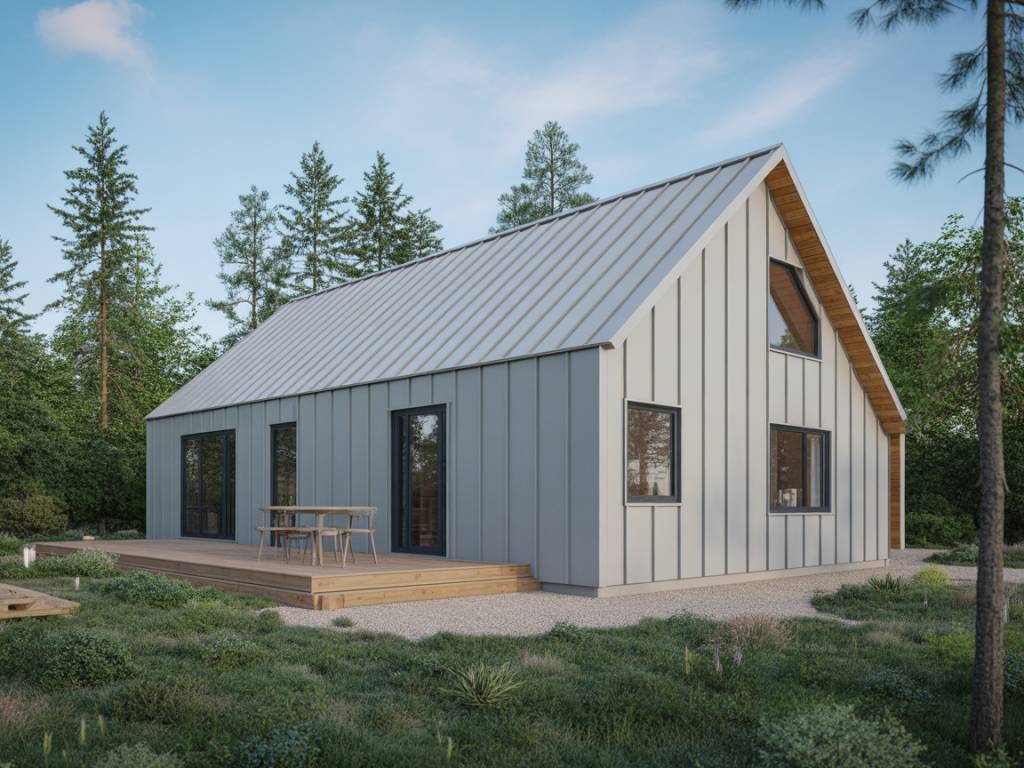
When you build with a steel frame or shipping containers, you quickly discover that paint and sealant are not just “finishing touches”. They are part of the structural strategy: they protect against corrosion, ensure airtightness, impact indoor air quality and even affect summer comfort through solar reflectance. If you also want these products to be genuinely eco-friendly, the choices narrow – but they do exist, and they’re getting better.
Below, I’ll look at what “green” really means in this context, which types of coatings work on metal structures, where eco alternatives are credible, and where you still need to compromise between performance and environmental impact.
Why coatings matter in metal-framed and container homes
On a timber frame, paint is mostly a comfort and durability issue. On steel or corten containers, it’s also about avoiding structural problems:
- Corrosion control: bare or poorly protected steel will rust, especially in coastal or industrial environments. Once corrosion progresses in thin-wall container panels, repair becomes complex and expensive.
- Condensation management: metal is a strong thermal bridge. Any discontinuity in the insulation or vapour control can lead to condensation on the steel surface. A robust coating system helps tolerate minor design or execution mistakes.
- Airtightness: in container conversions, every cut (windows, doors, service penetrations) has to be perfectly sealed. Good sealants are the difference between a low-energy envelope and a leaky box.
- Indoor air quality: small internal volume + lots of coatings = potentially high VOC concentrations if products are badly chosen. This is particularly true in tiny homes and off-grid cabins with limited ventilation.
In short, the paint, primers and sealants on a metal home are part protection, part health issue, and part energy-performance component. That’s why “eco-friendly” can’t mean “pretty label and plant on the packaging”; it has to be evaluated on several technical criteria.
What makes a paint or sealant “eco-friendly” on metal?
For a modular steel or container project, I generally look at five parameters before calling a product “eco-friendly enough”:
- VOC content and emissions
- Check actual VOC content in g/L, not just the marketing claim.
- For interior paints, aim for <10 g/L when possible, and definitely under 30 g/L.
- For sealants, prefer “low odour” and “low VOC” lines, and verify via technical datasheet.
- Binder and solvent type
- Water-based acrylics or hybrids are generally preferable to solvent-borne alkyds for interiors.
- For heavy-duty primers, epoxy or polyurethane is still common; focus then on high-solids and low-solvent versions.
- Plant-based/biobased binders (linseed, castor, etc.) can be interesting indoors, but need proper system design on metal.
- Additives and biocides
- Exterior paints often include fungicides and algicides. Some lines reduce these or use encapsulated/less persistent molecules.
- For indoor environments, avoid unnecessary biocides when good detailing and moisture control can do the job.
- Durability and maintenance
- A coating that lasts 20–25 years with minimal maintenance will usually be more sustainable than a “perfectly natural” product that has to be redone every 5 years.
- On roofs and exposed metal, look for tested systems with corrosion-class ratings (e.g. C3, C4, C5 according to ISO 12944).
- Certifications and transparency
- Look for labels such as EU Ecolabel, Nordic Swan, GREENGUARD Gold, natureplus or equivalent regional standards.
- Read technical and safety datasheets: they reveal VOC content, hazard classes and sometimes ingredients.
On metal structures, you often end up working with hybrid systems: an industrial, high-performance primer as a “necessary evil”, then more eco-responsible intermediate and finish coats where the performance margin is larger.
Primers and rust protection: the non-negotiable layer
If you’re dealing with a shipping container or exposed steel frame, the primer is the critical layer. Without it, fancy eco paints on top won’t compensate.
There are three main categories you’ll encounter:
- Epoxy anti-corrosion primers
- Very common in container refurbishment yards and on serious metal jobs.
- Excellent adhesion and chemical resistance; can reach high corrosion classes.
- Downside: usually solvent-borne, with potential VOC and health issues during application.
- Eco angle: pick high-solids or water-based epoxy systems to reduce solvent content and improve coverage per litre.
- Zinc-rich primers
- Contain high loads of zinc dust; provide galvanic protection to the steel.
- Excellent for highly exposed structures (marine, industrial environments).
- Environmental issue: zinc mining and ecotoxicity if particles end up in soil/water.
- Use only where justified (coastal sites, exposed structural steel), not by default on every container 200 km from the sea.
- Water-based anti-corrosion primers
- Progressively improving: acrylic or epoxy dispersion primers can now reach C3–C4 environments with good surface prep.
- Lower VOC, easier cleanup, better for interior steel surfaces (e.g. beams inside the envelope).
- Check that the system is approved for the type of steel (galvanized, corten, standard structural steel).
Key practical point: never sand or grind an existing container coating without knowing what it is. Original marine paints can contain heavy metals and isocyanates. Prefer:
- Wet sanding with appropriate PPE, or
- Certified shot blasting by a professional, or
- Chemical stripping systems that capture residues properly.
Once a solid primer is in place, you can switch to more eco-friendly intermediate and finishing coats without compromising structural protection.
Interior wall paints for metal homes
Inside a container or steel-framed house, you rarely paint bare metal. You generally have:
- Plasterboard on metal studs,
- Wood-based panels (OSB, plywood) over a steel framing, or
- Prefabricated sandwich panels with metal skins and insulation cores.
So we’re essentially choosing wall paints compatible with standard building boards, under tougher constraints for humidity and thermal movement.
Three families of interior coatings stand out for eco-conscious projects:
- High-quality acrylic paints with very low VOC
- Most mainstream manufacturers now have “eco” or “air quality” ranges.
- Look for EU Ecolabel, A+ emission ratings (in France and some EU markets), or GREENGUARD Gold.
- Good all-rounder for walls and ceilings; easy to clean and recoat.
- Mineral silicate or lime-based paints
- Water-glass (silicate) paints chemically bond with mineral substrates; excellent durability and vapour permeability.
- Low VOC by nature; often very stable over time, no yellowing.
- Limitation: they need mineral substrates (plaster, lime render, cement board). On plain plasterboard, you need compatible primers; on OSB or metal, generally not suitable.
- Plant-based or partially biobased paints
- Use vegetable oils/resins as binders, sometimes combined with mineral fillers.
- Advantage: lower fossil resource use, often very low VOC.
- Check for drying time and hardness: some are slower to cure and less abrasion-resistant, which is fine for bedrooms, less ideal for high-traffic circulation areas.
Because container and metal-framed homes tend to be compact and airtight, indoor air quality is critical during the first months of occupation. Two practical strategies:
- Plan all interior painting before installing final floor coverings to allow for intensive airing and dehumidification.
- Prefer paints that have been tested for VOC emissions over time, not just initial VOC content in the can.
Sealants: airtightness without toxic fumes
In metal structures, sealants are everywhere: around windows cut into a container sidewall, at joints between panels, around pipes, at the junction between flashings and wall cladding. Bad sealant = air leaks, water ingress and mould.
From an eco and performance point of view, you’ll mostly be choosing between:
- MS polymer / hybrid sealants
- Very good adhesion on many substrates (metal, glass, some plastics, painted surfaces).
- Solvent-free or very low solvent; usually isocyanate-free.
- Remain flexible; well-suited to the thermal movements of metal shells.
- Good compromise for eco-conscious airtightness joints and exterior seals.
- Neutral-cure silicones
- Excellent UV resistance; ideal for exterior joints around windows and roof flashings.
- Check labelling: the “neutral” families are usually less corrosive and have more manageable odours than acetic silicones.
- Eco downside: difficult to recycle and sometimes problematic in waste streams, but used in small quantities.
- Acrylic sealants
- Water-based, paintable, low VOC. Good for interior crack-filling and jointing before painting.
- Not suitable for high movement or permanent water exposure.
- Useful indoors for joints between plasterboards, skirtings, etc., but not as a primary weather seal on the container shell.
- Polyurethane sealants
- Very strong adhesion and flexibility; widely used in industry and on roofs.
- Contain isocyanates and often solvents; application requires serious PPE and ventilation.
- I tend to reserve them for specific situations where no other technology can deliver the same performance.
For an eco-oriented project, a typical strategy is:
- Use MS polymer or neutral silicone for all exterior joints and high-movement areas.
- Use acrylics for interior, paintable joints.
- Limit polyurethane to critical, justified interfaces (e.g. certain roofing details), and manage application carefully.
Exterior finishes and roof coatings
On a metal house, the exterior coating choice affects not only durability, but also summer comfort and energy bills. A dark, low-reflectance paint on a container roof can easily add several degrees indoors.
Key options to consider:
- High-reflectance “cool roof” coatings
- Special acrylic or elastomeric coatings with high solar reflectance (SRI often >80).
- Applied to container roofs or steel decks, they can reduce surface temperature by 10–20°C compared with dark paints in full sun.
- Eco benefit: lower cooling loads, sometimes allowing smaller HVAC units.
- Water-based acrylic facade paints
- Standard choice for painted steel cladding or cement render over a metal frame.
- Look for elastomeric grades compatible with the substrate to manage micro-cracks and thermal movement.
- Pick products with limited biocide content; in many climates, a good roof overhang and correct detailing are more efficient against algae than aggressive chemicals.
- Factory-coated metal cladding
- When possible, use pre-painted steel sheets (coil-coated) for facades and roofs.
- Industrial coatings are applied under controlled conditions with high durability and limited waste.
- You reduce on-site solvents and packaging, at the price of less flexibility for future colour changes.
On roofs, if you’re retrofitting an existing container or corrugated sheet, check the compatibility between the old and new systems: some solvent-based coatings can soften or destabilise older layers.
Sourcing strategy: how to choose products and suppliers
Standing in front of 30 different “eco” cans at a DIY store is not an efficient selection method. A more systematic approach helps:
- Start from the substrate and exposure class
- Is it bare steel, galvanized, corten, aluminium, plasterboard, cement board, timber, sandwich panel?
- Is it inside the insulated envelope, under a ventilated rainscreen, or fully exposed to weather?
- Define the performance requirements
- Corrosion class (for metal), UV exposure level, mechanical abrasion, humidity (bathroom, kitchen?).
- Regulatory context: some countries require minimum VOC categories or specific labels in dwellings.
- Shortlist products using objective filters
- VOC content and emissions labels.
- Presence of recognised eco-labels.
- Technical approvals for the specific substrate (steel, galvanised, etc.).
- Talk to professional distributors
- Ask for full system recommendations (primer + intermediate + finish), not isolated products.
- Request technical datasheets and, if possible, environmental product declarations (EPDs).
In practice, you’ll often end up mixing sources: perhaps an industrial marine-coating supplier for the initial container shell refurbishment, then a more “green building” oriented brand for interior paints and sealants.
Budget and performance: what to expect
Eco-oriented products are not necessarily more expensive over the full life of the building, but unit prices can be higher. A few order-of-magnitude figures (these will vary by region):
- Interior eco-paints: mid-range low-VOC acrylics or mineral paints might cost 15–30% more per litre than entry-level products, but they often cover better (fewer coats) and age more gracefully.
- High-solids or water-based anti-corrosion primers: unit price higher than standard alkyds, but with better coverage (m²/L) and less solvent content.
- MS polymer sealants: usually 20–40% more expensive than basic acrylics or general-purpose silicones, but with longer service life on exteriors.
On a typical 3-container home project, the incremental cost of choosing higher-quality eco paints and sealants often remains in the low thousands, while the impacts on comfort and durability are very tangible over 15–20 years.
Case snapshot: retrofitting a 3-container family home
Take a concrete example: a 3 x 40’ high cube container home converted in a temperate, occasionally humid climate.
- Existing shell
- Original marine coating in poor condition on the roof, acceptable on sidewalls.
- Corrosion spots around corner posts and lower side rails.
- Strategy
- Roof and heavily exposed elements: full mechanical cleaning, then application of a high-solids epoxy primer (industrial grade, high corrosion class), finished with a white cool-roof acrylic coating.
- Sidewalls: local rust treatment, spot-priming, then maintenance coat with a lower-VOC water-based acrylic compatible with the original system.
- Interiors: steel structure largely hidden behind insulated framing and plasterboard. Use of A+ rated low-VOC acrylic paint on walls and ceilings, mineral paint in the bathroom on cement boards.
- Sealants: MS polymer for window perimeters and exterior joints, acrylic sealant inside for panel joints before painting.
- Result
- Measured indoor VOC levels during commissioning below typical thresholds for new housing, after 2–3 weeks of active ventilation.
- Roof surface temperature reduced significantly in summer, lowering internal peak temperatures by several degrees in the top rooms.
- Maintenance plan: visual inspection every 2 years, retouching only at local defects rather than broad repainting.
This is a classic hybrid approach: using a more conventional but efficient industrial primer where the risk is highest, then maximising low-VOC and eco-labelled products for everything in direct contact with indoor air.
Practical tips for DIY and small pro teams
Even the best product becomes problematic if badly applied. A few field-based reminders that matter particularly in tight metal envelopes:
- Ventilation during and after application
- In small containers, VOC concentrations can rise quickly. Plan cross-ventilation and, if possible, temporary mechanical extraction.
- Avoid sleeping in freshly painted rooms for at least several days, more if using solvent-based primers.
- Respect temperature and humidity ranges
- Metal surfaces can be cold to the touch even when air temperature is reasonable. Many products require a minimum substrate temperature and a limited dew-point spread.
- Painting a slightly condensing container wall is an excellent way to guarantee adhesion problems.
- Surface preparation is non-negotiable
- Degreasing, rust removal and dust control are essential on metal. No “eco paint” will compensate for a greasy, partially rusted surface.
- On interior boards, remove dust, joint-compound residues and incompatible previous coatings.
- Tool cleaning and waste management
- Water-based systems: wash tools in a bucket, let solids settle, dispose of sludge with hazardous waste if advised by local rules, and pour only clarified water into drains.
- Solvent-based systems: avoid DIY cleaning with large amounts of solvent; use professional cleaning services when possible or strictly follow local hazardous waste regulations.
Building with metal and containers forces you to think in systems: steel, insulation, vapour control, and finally coatings all interact. Choosing eco-friendly paints, sealants and finishes is less about finding a miracle “green” product and more about assembling a coherent set of layers that protect the structure, respect occupants’ health and limit environmental impact over the building’s life.