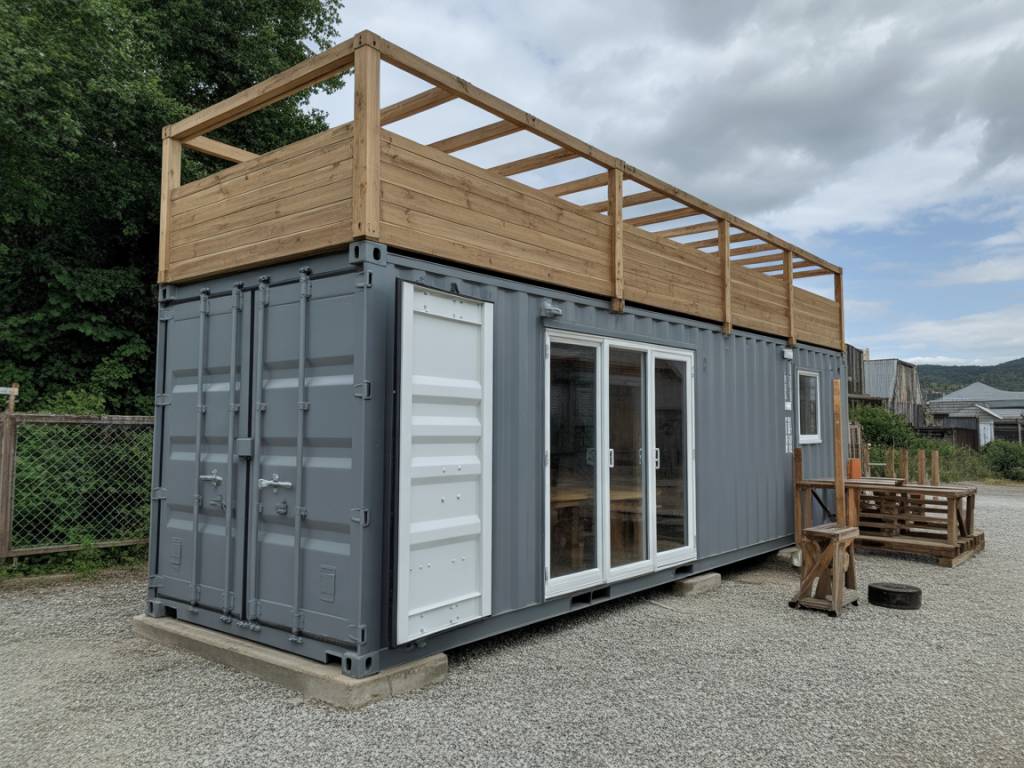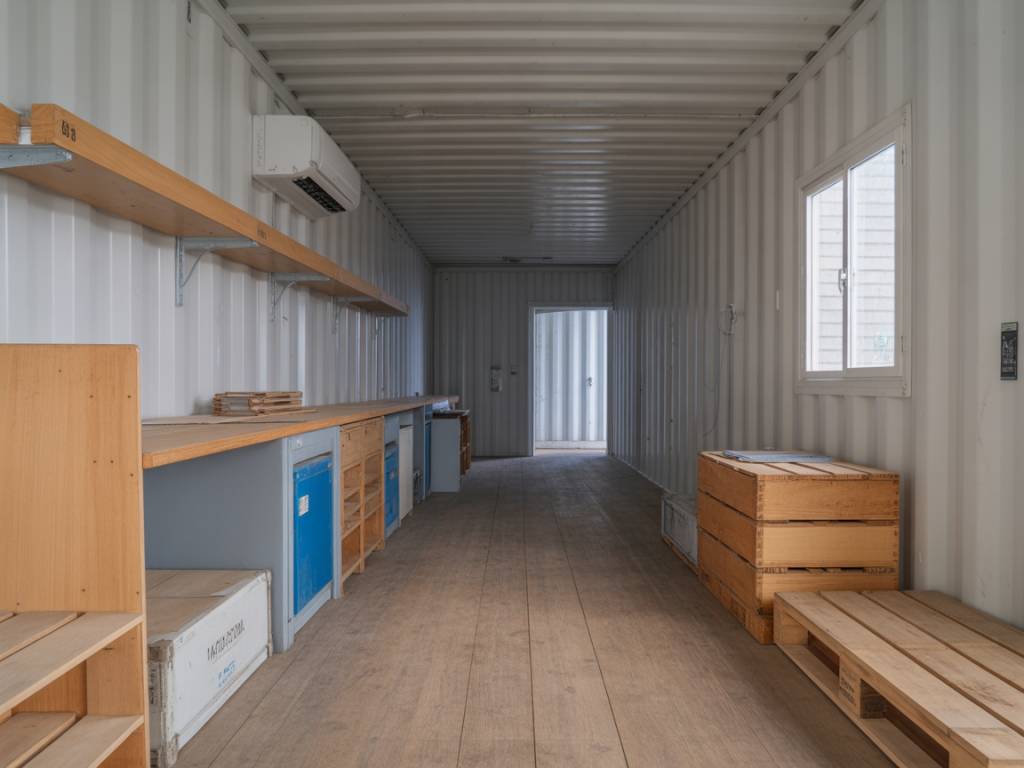
Transforming industrial waste into interior finishes is no longer a niche for artistic eco-lodges. In container architecture, it is becoming a pragmatic way to cut costs, reduce environmental impact and give standard steel boxes a distinctive identity. The question is less “Is it possible?” than “How do we do it without compromising safety, comfort and durability?”.
Why upcycled finishes make sense in container interiors
Shipping container projects start with a paradox: a structural shell that is over-dimensioned for residential loads, but a very small interior volume and a tight performance brief (thermal comfort, acoustics, fire safety). Every additional layer matters.
In that context, upcycling industrial waste into interior finishes offers three tangible advantages:
- Cost control: Offcuts, rejects and surplus stock are often available well below the price of conventional finishes. For a 40 ft container (around 28–30 m²), interior finishes can represent 10–20% of the fit-out cost.
- Environmental performance: Reusing industrial by-products can significantly reduce embodied carbon compared to buying new MDF, PVC flooring or ceramic tiles, especially when materials are sourced locally.
- Design differentiation: In a market where many container homes end up looking similar inside (white plasterboard, generic laminate flooring), upcycled finishes become a clear identity marker for both private homes and commercial projects.
The challenge is to move from “good idea on paper” to a robust specification: which waste streams are compatible with container interiors, and under what technical conditions?
Key industrial waste streams suitable for container interiors
Not all waste is equal. Some industrial by-products are naturally suited for interior use, others require heavy processing or should stay outside the living envelope. Below are the streams most frequently (and realistically) used as interior finishes.
Reclaimed wood and engineered offcuts
Wood is often the first material people think of, and for good reason: it brings warmth to the steel envelope and performs relatively well in terms of acoustics.
Typical sources include:
- Factory offcuts from engineered wood (OSB, plywood, laminated panels) that are too small for industrial lines but perfect for container-scale projects.
- Reclaimed formwork boards from construction sites, once cleaned, de-nailed and planed.
- Discarded pallets and crates, especially in logistics hubs, which can be re-sawn into cladding strips.
Common uses inside containers:
- Wall and ceiling cladding with narrow boards or panel mosaics.
- Custom cabinetry and shelving built from laminated offcuts.
- Feature walls using mixed species and thicknesses for a three-dimensional effect.
Points to check carefully:
- Moisture content: For interior use, aim for 10–14%. Wood stored outdoors at a yard may need kiln-drying or at least a few weeks in a dry, ventilated space.
- Chemical treatments: Some pallets (especially older or imported ones) were treated with pesticides or fumigants. Look for HT (heat treated) markings and avoid unknown or painted pallets inside living spaces.
- Fire behaviour: In small metal volumes, exposed wood should ideally be paired with a fire-resistant backing (e.g., plasterboard) or treated with intumescent coatings, especially in escape routes.
Metal sheets, coils and perforated panels
Using more steel inside a steel box may sound counter-intuitive, but metal finishes can be extremely efficient in specific zones, provided the acoustic strategy is handled properly.
Typical industrial waste sources:
- Off-spec metal coils from roofing or cladding manufacturers (scratches, colour variations, micro-dents).
- Perforated sheets cut wrong for industrial projects.
- Production leftovers from ventilation ducting or metal furniture factories.
Applications inside containers:
- Kitchen backsplashes and wet area wall panels, where water resistance and cleanability are key.
- Magnetic wall zones for offices or children’s rooms using steel sheets behind a thin paint layer.
- Perforated acoustic ceilings combined with a mineral wool backing to reduce reverberation.
Technical aspects to control:
- Corrosion protection: Prefer galvanized or pre-coated steel. In bathrooms or coastal areas, pay attention to cut-edge protection and sealants.
- Thermal bridges: Directly fixing interior metal panels to the container shell can create cold bridges and condensation points. Always maintain the continuity of insulation and use thermal breaks where needed.
- Sound reflection: Metal is very reflective acoustically. Combine it with absorbent surfaces (wood fibre, acoustic panels, fabrics) to avoid a “tin can” effect.
Glass, ceramics and mineral offcuts
The mineral sector generates a surprising amount of usable waste: cutoffs from countertop factories, rejected tiles, surplus glass panels or broken slabs that can be recut.
Main sources:
- Stone and composite worktop manufacturers (quartz, granite, terrazzo, solid surface materials) producing narrow offcuts or broken pieces.
- Ceramic tile factories with obsolete series, colour mismatches or calibration defects.
- Glaziers and window manufacturers with mis-measured units or scratched panes.
Possible uses inside containers:
- Bathroom and kitchen splashbacks using mismatched tiles in a deliberate “patchwork” pattern.
- Tabletops and work surfaces made from assembled stone or composite offcuts.
- Internal partition windows or light strips using recut glazing to bring light through the core of the container.
Key constraints:
- Weight: Stone is heavy. In a single container this is rarely a structural problem, but it impacts handling and transport. Limit heavy finishes to localized areas.
- Cutting and edge finishing: Working with glass or stone requires appropriate tools and safety equipment. This is typically not a DIY step unless you have experience.
- Safety glazing: In doors or low-level partitions, use toughened or laminated glass, even when it comes from industrial waste, to meet basic safety expectations.
Textile and acoustic waste
Containers are notoriously difficult spaces acoustically: thin metal walls, limited volume, parallel surfaces. Upcycled textiles and acoustic by-products can improve sound quality while adding visual texture.
Common sources include:
- End-of-roll upholstery fabrics and rejects from furniture manufacturers.
- Acoustic panel offcuts from cinema or office fit-out projects.
- Recycled felt panels made from post-consumer PET bottles or clothing, often available as production waste.
Interior uses:
- Wall hangings and tensioned fabric panels behind beds or along noisy facades.
- Ceiling “clouds” combining acoustic foam offcuts and fabric, suspended under the structural ceiling.
- Soft pinboards above study areas, reusing acoustic felt or textile-covered boards.
What to verify:
- Fire performance: Textiles and foams can be highly combustible. For sleeping spaces and escape routes, look for materials with tested fire ratings, and avoid unknown polyurethane foams from old furniture.
- VOC and odours: Some recycled foams or synthetic textiles can off-gas. If you cannot obtain data, test small samples in a closed box for a few days before installing them at scale.
- Cleaning and maintenance: Dust accumulation in heavily textured fabrics is a real issue in small spaces. Removable covers or washable panels are preferable.
Plastics, rubber and composite scraps
Plastic and rubber waste is abundant, but not all of it is desirable indoors. The key is to focus on well-characterized, stable materials and to encapsulate them properly when necessary.
Potentially interesting streams:
- Rubber flooring offcuts from sports halls and gyms (often made from recycled tyres bound with PU resins).
- High-pressure laminate (HPL) cutoffs from furniture or façade cladding production.
- Recycled plastic sheets (HDPE, PP, PET) made from industrial packaging, which sometimes have cosmetic defects.
Typical uses:
- High-traffic flooring in entry zones or mudrooms, using rubber tiles or strips.
- Worktops, shelves and wet room cladding made from recycled plastic panels, which are water-resistant and easy to clean.
- Impact-resistant wall skirting combining HPL offcuts with a simple backing board.
Necessary precautions:
- Fire and smoke: Many plastics release toxic fumes when burning. Focus on products designed originally for building applications (flooring, panels) rather than arbitrary industrial waste.
- UV stability: Recycled plastics can yellow or become brittle in direct sunlight. Inside containers, large windows and glazed doors may expose some panels to intense UV.
- Mechanical fixing: Some plastics move significantly with temperature. Plan for expansion joints and flexible adhesives where necessary.
From raw waste to interior finish: the processing chain
Between the waste pile and the finished wall, several steps are often glossed over in marketing stories. In practice, the “hidden” processing can make or break the economic and environmental balance.
Expect at least four main stages:
- Selection and sorting: Separating usable pieces by material, dimension, state and contamination level. This can be labour-intensive and should be accounted for in your cost calculations.
- Cleaning and decontamination: Removing oils, paints, dust, mould or unknown residues. Depending on the source, this may require mechanical cleaning, sanding or even professional treatment.
- Dimensioning: Cutting, planing or machining to standard module sizes for easier installation in repetitive container projects.
- Finishing and protection: Applying oils, varnishes, paints or coatings that are compatible with indoor air quality requirements and the end-use conditions.
On a one-off self-build, some of this can be carried out on site with basic equipment. On a multi-container housing project, it often makes sense to partner with a local recycler or small industrial workshop that can guarantee minimum quality standards and repeatability.
Performance: what really matters in a steel box
Container interiors impose specific constraints that should always be tested against any upcycled material idea. Four criteria are particularly critical.
- Fire safety: The steel shell does not burn, but it heats up quickly, and escape routes are short. Limit high-combustible finishes, especially near stoves, heaters and electrical cores. When possible, place upcycled finishes over a fire-rated substrate (plasterboard, fibre-cement).
- Moisture and condensation: Thermal bridges at the steel shell can cause hidden condensation. Ensure the insulation and vapour barrier strategy is designed first, then integrate upcycled finishes as the final visible layer, without puncturing critical membranes.
- Indoor air quality: Some industrial wastes were never intended for indoor use. Without data sheets, assume caution: favour materials whose original application was in buildings, furniture or interiors.
- Acoustics: Containers tend to amplify noise. Hard, reflective finishes should be balanced with a minimum of absorbent surfaces—textiles, acoustic panels, perforated liners—to avoid discomfort in everyday use.
Aesthetic strategies: from “junkyard look” to controlled character
There is a fine line between “industrial chic” and a space that simply feels unfinished. The difference usually lies in how consistently the upcycled theme is handled.
A few pragmatic design approaches:
- One dominant upcycled material per zone: For instance, reclaimed wood in the living area, recycled plastic panels in the bathroom, metal sheets in the kitchen. This avoids visual chaos.
- Neutral background, expressive accents: Keep ceilings and larger wall surfaces in a calm, light finish (painted board or simple ply), then use upcycled elements on one or two focal walls.
- Repeat patterns and modules: Even if materials come from mixed sources, maintaining common module sizes (e.g., 100 mm boards, 300×300 mm tiles) creates order and readability.
- Visible fixing as a design choice: Screws, rivets, clips can be aligned and repeated as a graphic element instead of being half-hidden and irregular.
Photographing mock-ups or a test wall under natural and artificial light before proceeding with full installation often avoids later regrets—especially in small spaces where every surface is always in view.
Cost, sourcing and logistics
On paper, waste is free. In reality, there are real costs: collection, transport, sorting, storage, processing and extra labour on site.
To keep the operation economically sound, it helps to:
- Limit the number of sources: Partner with one or two nearby industrial players whose waste stream is stable (for example, a single furniture factory plus a single stone countertop workshop).
- Negotiate pre-sorted batches: Paying a modest fee for pre-sorted, dimensioned offcuts is often cheaper than collecting random waste for free and sorting it yourself.
- Think in container modules: A 20 ft or 40 ft container has relatively standard interior dimensions. Designing your finishes around these dimensions helps minimize cutting time and offcuts.
- Plan storage: Upcycled materials are rarely “just in time”. You may have to store batches for weeks. Dry, ventilated storage is critical for wood and textiles in particular.
It is realistic, on a well-managed project, to reduce the cost of interior finishes by 20–40% compared to a standard specification, especially when labour is partly self-provided. On professional turnkey projects, savings are often lower, but the unique selling point for marketing and communication can justify the effort.
Risks, red flags and how to mitigate them
Three recurring problems appear in container projects using upcycled finishes.
- Unknown chemical history:
Materials from industrial environments can have been exposed to oils, solvents or heavy metals. Avoid anything with an unclear origin for direct interior use. When in doubt, restrict suspect materials to decorative, non-contact zones, or encapsulate them fully behind a certified coating. - Inconsistent supply:
Falling in love with a specific waste stream only to see it disappear halfway through the build is a common frustration. Always verify that the source can provide sufficient quantity for at least one full container unit before finalizing the design. - Over-complexity on site:
Working with irregular pieces and mixed materials can quadruple fitting time if not anticipated. Prefabricating panels or modules off-site and installing them like standard products is often more efficient.
Addressing these risks early—during design and procurement—allows the actual on-site phase to remain predictable, which is critical when working with tight container fit-out schedules.
Where upcycled finishes make the most sense in a container
Not every surface has to tell a recycling story. Strategically, the best candidates for upcycled finishes are:
- Feature walls behind sofas, beds or dining areas, where impact risk is low and visual interest is welcome.
- Built-in furniture (benches, storage, desks) that can be prefabricated and precisely detailed off-site.
- Ceiling treatments in living spaces, using lightweight wood or acoustic materials to soften the metallic box effect.
- Service cores (kitchen and bathroom), where durable, easy-to-clean upcycled mineral or metal finishes can replace new tiles or laminates.
This selective approach allows you to combine the reliability of conventional solutions where necessary (for example, fire-protected escape routes) with the character and environmental benefits of upcycled materials in less constrained zones.
Container architecture has always been about making the most of a pre-existing industrial object. Extending that logic to interior finishes—by integrating industrial waste streams in a controlled, technically sound way—is a natural next step. Done methodically, it is less a stylistic statement than a rational construction strategy: less new material, more value extracted from what already exists, and interiors that no longer feel like generic boxes, but like spaces with a clear, tangible story of how they were made.