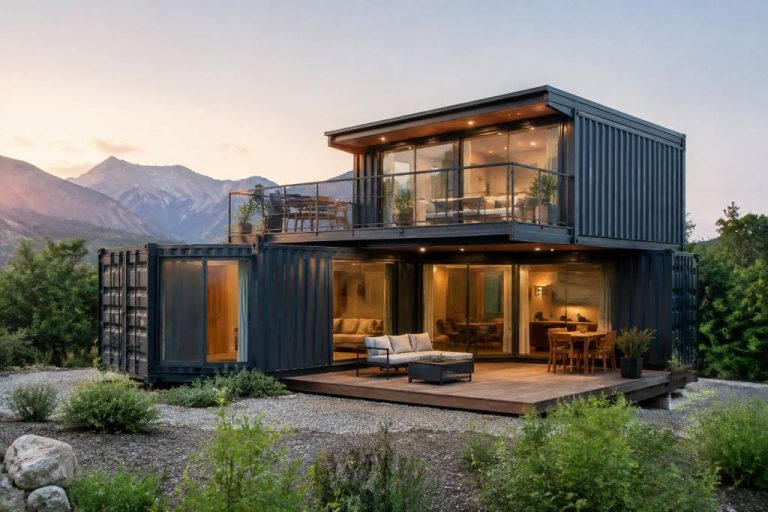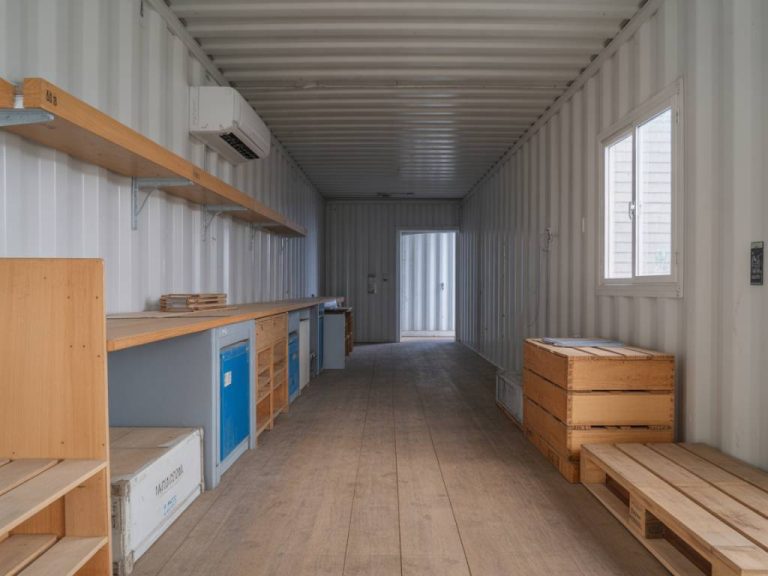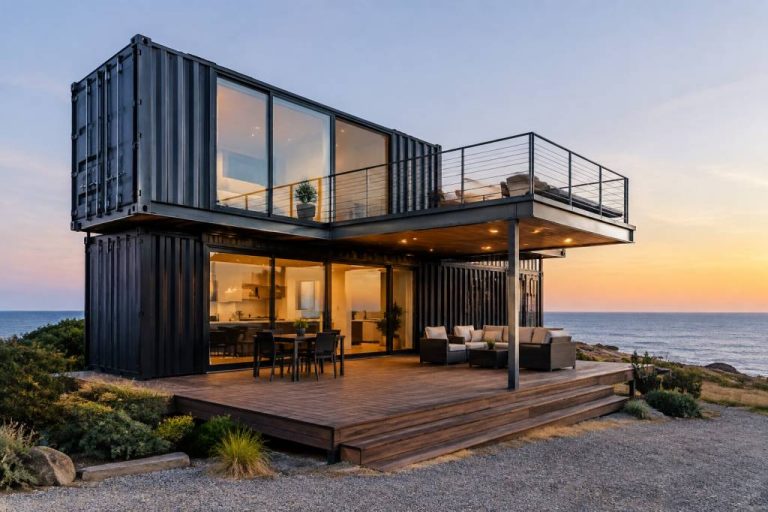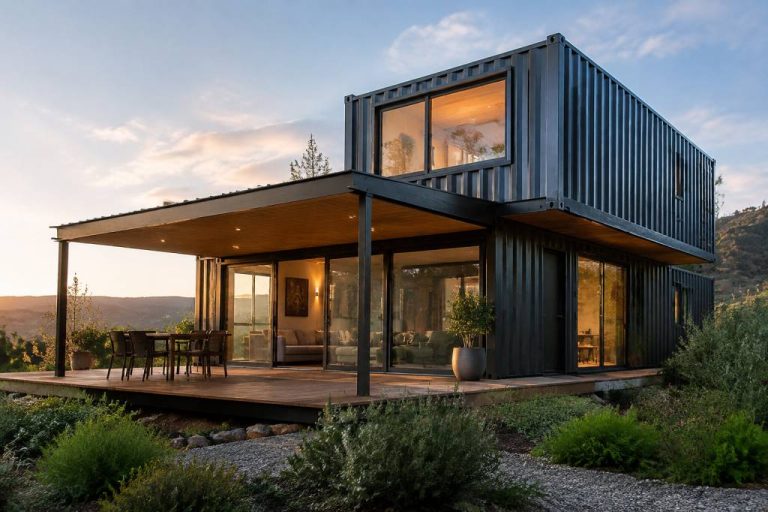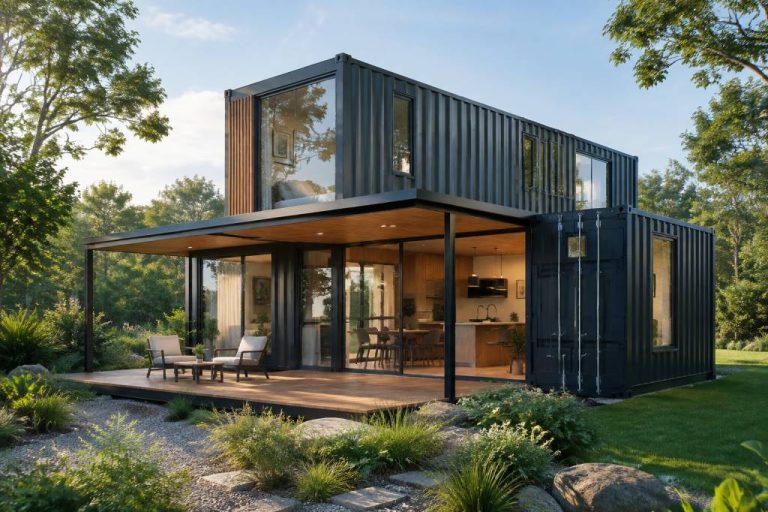
Using reclaimed steel and timber to reduce the carbon footprint of container builds
Reusing shipping containers is déjà a form of upcycling. But if the structural steel around your container house is all new, and the cladding or interior fit-out relies heavily on virgin timber, the “recycled” story stops at the box itself. More and more projects are now going one step further: combining reclaimed steel and reclaimed timber to cut the embodied carbon of the whole build, tout en gardant des performances structurelles et thermiques très correctes.
Why look beyond the container itself?
A standard used shipping container already offers a significant carbon advantage compared with a conventional steel frame:
But in a typical container-based house, the containers rarely represent more than 30–40% of the total embodied carbon. The rest comes from:
This is where reclaimed steel and timber can make a measurable difference. On a 70–90 m² container home, several lifecycle analyses show that shifting half of the structural and cladding package to reclaimed materials can reduce overall embodied emissions by 15–30%, depending on how far the materials travel and how much processing they need.
Reclaimed steel: more than just “scrap metal”
In many container builds, additional steel is inevitable:
New structural steel has a carbon intensity in the range of 1.7–2.3 kg CO₂e per kg (blast-furnace route, global average). Even recycled-content steel produced via electric arc furnaces still averages 0.4–0.8 kg CO₂e per kg, depending on the electricity mix. By comparison, directly reusing steel members (without remelting) is often logged at 70–95% lower embodied carbon than new steel, because you avoid the energy-intensive manufacturing steps.
On container projects, reclaimed steel usually appears in three forms:
The key is not just to “find cheap steel”, but to specify elements that can be re-certified or at least dimensioned safely in engineering calculations.
Engineering and regulatory considerations with reused steel
In Europe, Eurocode 3 and associated national annexes do not explicitly forbid reused steel, but engineers must demonstrate that the material properties match or exceed those assumed in design. That leads to a few systematic checks on a container project:
Does this add cost? Yes—but usually less than people think. For small and medium container builds:
From a carbon perspective, the trade-off is even clearer. A common rule of thumb used by several European circular-construction pilots: every tonne of reused steel, directly substituted for virgin steel, avoids 1–1.5 tonnes CO₂e. On a two-container house with an added steel frame of 2–3 tonnes, that’s already meaningful.
Practical strategies for using reclaimed steel in container builds
On the ground, teams that successfully integrate reused steel into container architecture tend to follow a few simple strategies.
1. Design to available sections, not the catalogue
Instead of drawing a beam schedule full of neat, catalogue-perfect IPE and HEA profiles, the engineer works backwards:
This approach is particularly compatible with container builds, where spans are often modest and where the containers themselves already provide a large portion of the structure.
2. Use reclaimed steel where inspection is easy
Reused elements are typically placed in locations where:
That way, potential long-term issues such as corrosion or accidental damage can be monitored and addressed.
3. Limit on-site welding on old members
Welding onto older steels, especially those of unknown composition, can present risks (cracking, brittle-heat-affected zones). Many circular projects therefore:
This also fits well with container work, where a large part of the steel modification (door openings, window frames, linking beams) is best done in a workshop before the modules arrive on site.
Reclaimed timber: from aesthetic feature to carbon lever
Timber is already perceived as the “green” counterpart to steel. But the reality is more nuanced. While the biogenic carbon stored in wood is an asset, processing, drying, transport and coatings still add emissions. In many LCA databases:
Reclaimed timber, when used in container projects, offers two additional benefits:
Typical uses around container houses include:
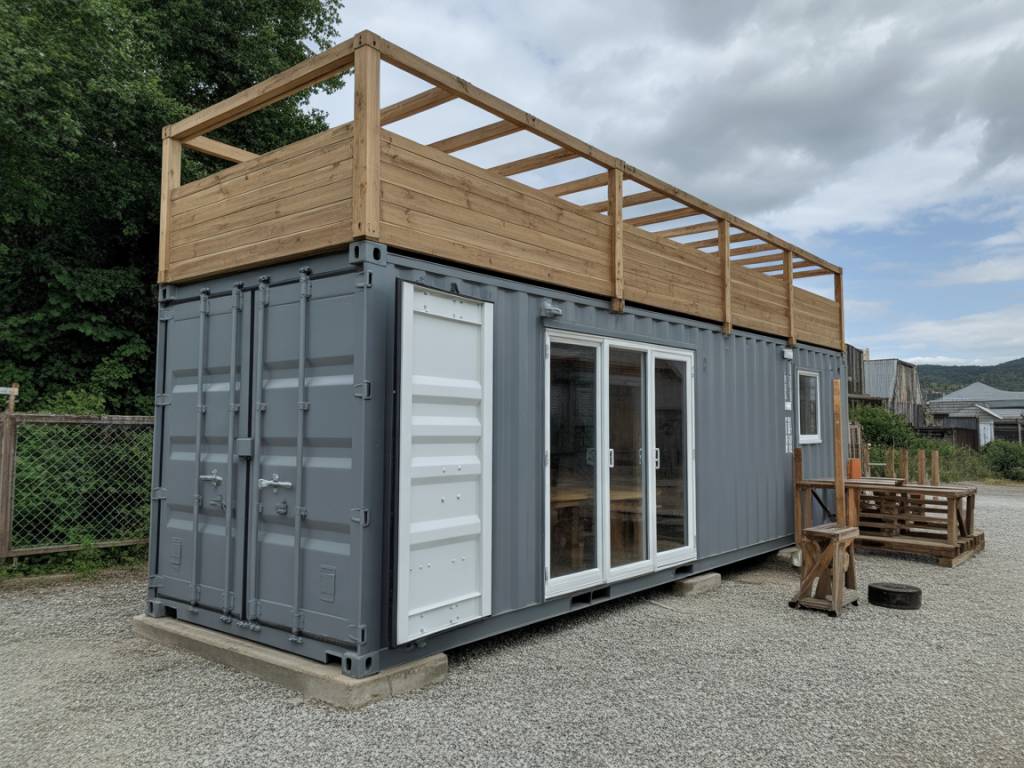
Some projects also push reclaimed timber into light structural roles: pergolas, canopies, light roof extensions sitting above container modules.
Moisture, durability and reclaimed wood around steel boxes
Container buildings have particular hygrothermal behaviours. Steel is fast to respond to temperature swings, and poorly detailed junctions can lead to condensation issues. Bringing reclaimed timber into that context demands a bit of discipline.
1. Control the water paths
For external cladding, it’s essential to treat the container wall like any other metal sheathing:
If timber is simply screwed directly onto untreated container steel, any micro-leak becomes a trap for moisture—and reclaimed wood, which may already have micro-cracks or old nail holes, will deteriorate faster.
2. Verify moisture content and previous treatment
Old structural timber can come loaded with surprises: residual moisture, insect damage, or legacy coatings (lead-based paints, creosote, heavy solvent varnishes). Before integrating it into a container home:
For exterior use, it’s often faster and safer to select naturally durable species (e.g. larch, cedar, some tropical hardwoods recovered from docks or railway structures) rather than relying on chemical preservatives.
Fire, acoustics and reclaimed timber linings
Inside container houses, timber linings are a popular way to counteract the “metal box” feeling and improve acoustics. Reclaimed boards, parquet or deconstructed paneling can perform just as well as new products, but there are a few issues to watch.
Fire performance
Shipping containers are normally treated as steel structures with non-combustible shells. Adding timber linings doesn’t automatically cause a problem, but building codes often require:
Where this becomes critical is in common escape routes (stairs, circulation spaces) or multi-unit container buildings. In those cases:
Acoustic performance
Timber linings, especially irregular reclaimed boards, can significantly improve acoustic comfort compared with bare steel or standard plasterboard. Uneven surfaces scatter sound, while cavities behind boards can be partially filled with mineral wool or recycled cellulose to add absorption.
On several container office projects, switching from flat plasterboard to perforated or slatted reclaimed-wood panels, backed with 45–70 mm of acoustic insulation, reduced mid-frequency reverberation times by 20–40%—with little change in cost, provided the material was sourced locally.
Where to source reclaimed steel and timber for container projects
Availability is very context-dependent, but a few channels recur in successful builds.
1. Deconstruction and demolition firms
Companies that deconstruct (rather than simply demolish) commercial buildings are prime sources of reusable steel sections and large timber components:
They increasingly offer catalogued components with basic documentation (dimensions, photos, sometimes test reports). For a container project, this makes it easier to design around what is actually available.
2. Industrial and logistics sites
Old racking systems, mezzanine structures and conveyor supports often end their life when an operator reconfigures a warehouse. These light-gauge steel elements can make excellent secondary framing for container façades, brise-soleil or interior mezzanines, provided their load capacity is properly checked.
Similarly, pallets, cable drums, and packing crates can be upcycled into non-structural timber elements: interior cladding, acoustic baffles, furniture. Here, the main constraints are labour (de-nailing, cutting) and finish quality.
3. Municipal and community reuse platforms
In some regions, local authorities support material reuse hubs: depots where surplus products from construction sites, exhibition stands or renovations are stored and resold. Container projects, with their modular and relatively forgiving geometry, are particularly well-suited to taking advantage of these irregular but low-cost flows.
Cost, carbon and labour: where are the trade-offs?
On paper, using reclaimed steel and timber is almost always better for embodied carbon. The main questions for architects, self-builders and developers are economic and organisational.
Material cost
Per kilogram or per linear metre, reclaimed steel and timber are generally cheaper than new—sometimes by 30–60%. However:
On a professionally managed project, the net effect is often a modest cost saving: 5–15% on the structural and cladding package. On self-build container houses where labour is partly “free”, savings can be significantly higher, provided the builder is comfortable with the extra work of sorting and preparing reclaimed elements.
Programme and predictability
The biggest constraint is often not money, but timing:
To manage this on container builds, some teams lock the container layout and foundation design early (these elements are usually new or standardised), while keeping the “skin and bones” around the boxes (façades, decks, canopies) more adaptable until reclaimed materials are secured.
Design tips to maximise the impact of reclaimed materials
Several patterns emerge from container projects that have successfully cut carbon with reclaimed steel and timber.
Looking ahead: integrating reuse into the container design workflow
Container architecture is already a halfway house between industrial product and bespoke building. That makes it an ideal testbed for deeper circularity: not only reusing the containers, but also feeding reclaimed steel and timber into the ecosystem around them.
In the next few years, three evolutions are likely to make this easier:
In the meantime, each container project that successfully integrates reclaimed materials does more than just shave a few tonnes off its carbon footprint. It also builds the know-how, the supply chains and the confidence needed for reuse to move from niche experiment to everyday practice in modular architecture.
À propos de l'auteur