Bruce Springsteen house: inside the homes of a rock legend
Bruce Springsteen is associated with New Jersey in a way few musicians are associated with any place. His songs return to its highways, bars and working towns; his public life has also remained closely tied to the state. That makes interest in his homes understandable. But the useful story is not a celebrity property tour. It is how a private rural residence, a modest childhood setting and a long relationship with place can tell us something about architecture, privacy and the way homes work.
Reliable information about Springsteen’s properties is limited. Media reports have linked him and his wife, Patti Scialfa, to a large property in Colts Neck, New Jersey, but published descriptions vary, and detailed plans or verified construction records are not generally available. This article separates what is broadly reported from what can responsibly be inferred. It does not reproduce private addresses or treat unverified real-estate claims as fact.
A life rooted in New Jersey
Springsteen grew up in Freehold, New Jersey, and later built a career that took him around the world. Yet the state remained a central reference point in his work and public identity. His songs often describe places that feel lived in rather than picturesque: streets where people work, gather, leave, return and try again.
That connection helps explain why accounts of his home life tend to focus on New Jersey rather than on a collection of conspicuous residences. A home in a familiar region can offer continuity, access to family and community, and distance from the public attention that comes with fame. In architectural terms, location is not just a view or a postcode. It shapes daily routines, transport, privacy and the relationship between a building and its landscape.
Springsteen’s childhood home in Freehold is frequently discussed in biographical coverage because it provides context for his early life. It should not be confused with a public museum or an open visitor attraction. Private residences, even when they become part of cultural history, remain private property unless their owners or authorities establish otherwise.
What is reported about the Colts Neck property?
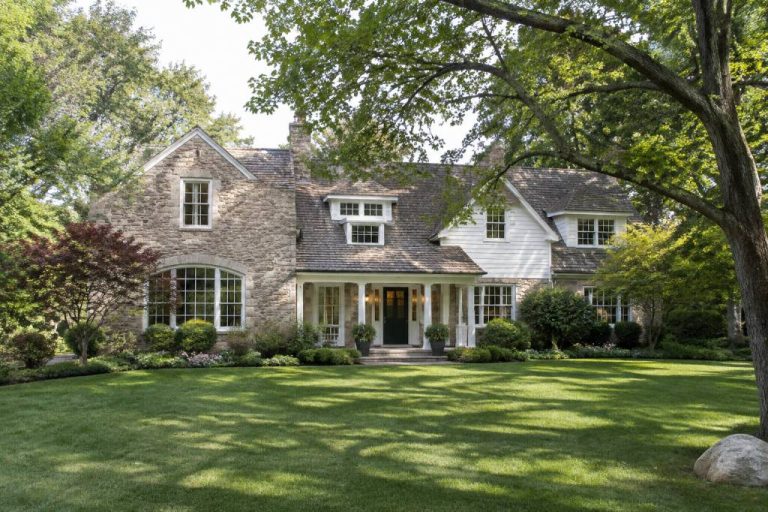
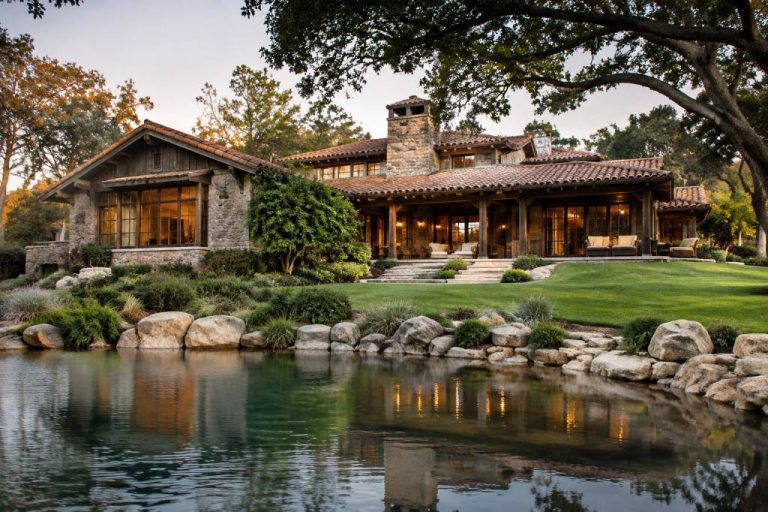
News and property reports have associated Springsteen and Scialfa with a country property in Colts Neck, a township in Monmouth County. The area is known for larger lots, equestrian properties and a less densely built environment than nearby towns. Accounts have described the couple’s residence as a farm or horse farm, although public sources do not consistently provide the same details about its buildings, acreage or facilities.
That distinction matters. A headline may call a property a “farm,” but the word can describe anything from an actively managed agricultural operation to a rural estate with horses and open land. Without verified planning documents or a statement from the owners, it is not possible to give a dependable inventory of the structures or their current uses.
What can be discussed is the broad design logic of a rural estate. A home set on a substantial parcel typically has to balance several practical needs:
-
Privacy: the position of the house, trees, gates and driveways can limit views from roads and neighboring properties.
-
Access: long driveways may improve seclusion but require maintenance, drainage planning and reliable access for emergency services.
-
Landscape management: lawns, woodland, paddocks and gardens all demand different levels of upkeep and affect stormwater runoff.
-
Outbuildings: garages, barns or studios can separate work and storage functions from the main living space, but add cost and maintenance.
-
Local rules: zoning, conservation requirements, septic capacity and building permits can limit what owners may construct or alter.
These are not claims about the exact layout of Springsteen’s home. They are the questions an architect or buyer would investigate before evaluating any large rural property.
Why a working landscape can matter more than a grand facade
Celebrity-home coverage often concentrates on square footage, purchase prices and dramatic entrances. Those details are easy to repeat, but they say little about how a home performs. A large property is a small infrastructure system: it may include private roads, drainage, heating equipment, storage, security and land that needs ongoing care.
For a household with horses, for example, the design brief changes. A stable needs ventilation, durable surfaces, safe circulation and reliable water. Feed and equipment require dry storage. Manure management must be planned rather than improvised. The stable’s location should take account of prevailing winds, vehicle access and the distance from living areas. These requirements apply whether the owner is famous or not.
Rural homes also have a different energy profile from compact urban houses. A detached building may have more exposed wall and roof area per occupant, increasing heating and cooling demand. Outbuildings can add further loads, especially if they need frost protection, lighting or equipment charging. Insulation quality, airtightness, window performance and the efficiency of the heating system therefore matter as much as the building’s visual style.
There is no public technical specification for Springsteen’s residence, so it would be misleading to assign it a particular insulation system or energy rating. But the general lesson is clear: the performance of a home cannot be judged from photographs alone. A handsome rural exterior may conceal anything from a well-insulated renovation to an older building with high operating costs.
From childhood house to personal history
People often want to connect an artist’s work to a specific address. In Springsteen’s case, Freehold is an important part of the story because it is where he spent formative years. But a childhood home is not a complete explanation for a career. Music develops through people, work, rehearsal, touring and changing experiences, not just through the rooms where an artist once lived.
There is also a practical architectural point here. Older homes can carry cultural value without being architecturally exceptional. Their significance may lie in the life that unfolded there, the neighborhood around them or the way they represent a period of local history. Preserving such a building raises familiar questions: Is the structure sound? Can it be adapted without erasing significant features? Who pays for maintenance? Is public access appropriate, or should the property remain private?
Those questions are relevant well beyond celebrity homes. Communities weighing whether to preserve a modest house, a factory or a former school face the same tension between memory and use. A building can matter to people while still requiring a realistic plan for upkeep and occupancy.
What celebrity homes can teach container-house builders
At first glance, a rural estate and a container home seem to belong to different worlds. One suggests land and space; the other is often associated with compact construction and reuse. Yet both begin with the same design decisions: what the building must do, where it will sit, how it will connect to services and how its occupants will maintain it.
For anyone considering a container-based home, the comparison is useful because it strips away the celebrity factor. The question is not whether a residence looks impressive in a photograph. It is whether its structure, envelope and site work together over time.
-
Start with the site. Check access for delivery trucks and cranes, soil conditions, drainage, setbacks and utility connections before buying a container.
-
Design for the climate. Steel conducts heat quickly. A container home needs a carefully designed insulation and condensation-control strategy, not just insulation added wherever there is space.
-
Plan openings structurally. Cutting large windows or doors into a container removes part of its load-bearing shell. Reinforcement may be required, and it should be designed by a qualified professional.
-
Compare total costs. The purchase price of a used container is only one line item. Transport, foundations, modifications, insulation, finishes, permits and services can make up a substantial part of the budget.
-
Check local approvals. Building codes and planning rules apply to container homes just as they do to other dwellings. A shipping container is not automatically an approved residential building.
A large estate and a compact modular dwelling have different budgets and scales, but both can fail if the owner treats the structure as a product rather than a system. The shell is only the beginning.
Privacy, security and responsible reporting
Interest in famous homes can quickly turn into an invasion of privacy. Property records, aerial images and social-media posts may reveal details, but their availability does not make every detail appropriate to publish. Repeating an exact address can create safety risks for residents, staff and neighbors.
There is a difference between reporting on architecture and providing directions to a private house. A responsible account can discuss a region, a building type or a documented renovation without publishing access points, security arrangements or interior layouts that have not been shared by the owner.
That restraint also improves accuracy. Celebrity real-estate stories are frequently copied from one outlet to another, sometimes with changing prices, dates or descriptions. A property may be attributed to the wrong person, or an old listing may be presented as current. Readers should look for a named source, a clear date and confirmation from reliable reporting before treating a specific claim as established fact.
The real appeal of a home tied to a musician
What makes Springsteen’s homes interesting is not a confirmed list of luxury features. It is the contrast between international fame and an enduring connection to a particular region. His public image is built around movement—touring, performing, crossing the country—while the homes associated with him suggest the value of a place to return to.
That idea is familiar to anyone choosing a home. The right property is not necessarily the largest or newest. It is the one that supports the way its occupants actually live, whether that means room for family, a workshop, animals, music or simply a quieter routine. Architecture is most useful when it responds to those needs with sound construction and realistic maintenance, rather than relying on a famous name or an impressive facade.
For readers interested in modular and container construction, the practical takeaway is straightforward: judge homes by what can be verified. Look at the site, structure, insulation, services, approvals and long-term costs. A rock legend’s rural residence may capture the imagination, but the decisions that make any home comfortable and durable are the same ones every owner has to get right.
À propos de l'auteur