Elton John houses: inside the singer’s most iconic homes
Elton John’s homes are more than celebrity property. They show how a house can become a working base, a place for collecting and entertaining, and a personal archive built over decades. From a country estate near Windsor to a high-rise residence in Atlanta, each home reflects a different setting—and a different way of using space.
For anyone interested in architecture, the useful question is not simply how much a famous house costs. It is how its layout, location, materials and upkeep shape daily life. Public details about private homes are often incomplete, so the picture below draws on reported property sales and documented features rather than treating every design detail as confirmed fact.
Woodside: a country estate near Windsor
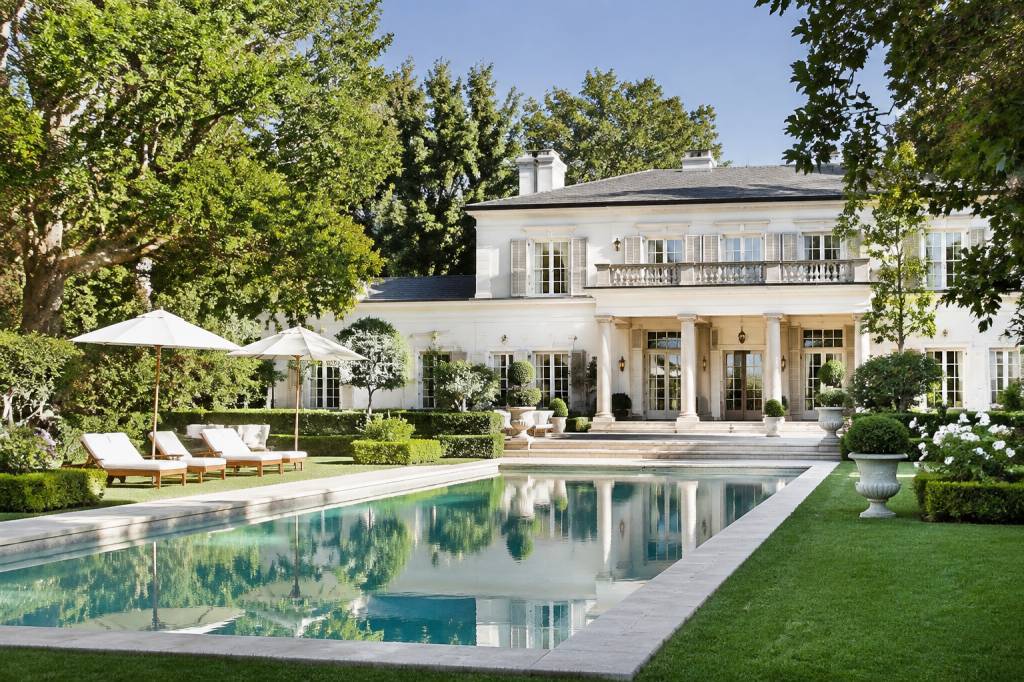
Woodside, in Old Windsor, Berkshire, is the home most closely associated with Elton John. The country estate has been his base since the 1970s, when he bought it during the height of his early success. Reports commonly describe the property as covering about 37 acres. That amount of land changes the practical character of a home: the house is not just a building, but the centre of a private landscape with gardens, mature trees and space between the residence and its surroundings.
The main house is generally described as Georgian in style. That architectural language favours ordered façades, balanced proportions and clearly arranged rooms. It differs sharply from the glass-and-steel image often attached to contemporary celebrity architecture. At Woodside, the appeal is continuity: a historic country house that can absorb modern domestic needs without losing its established character.
Maintaining a large historic property involves more than preserving attractive interiors. Roofs, windows, drainage, heating and the condition of exterior walls all require regular attention. Older buildings can also be difficult to upgrade for energy performance. Insulating a historic structure, for example, requires care: an unsuitable intervention can trap moisture in walls or damage original finishes. The exact upgrades at Woodside are not publicly documented, but the general challenge is familiar to owners of traditional houses.
A sizeable estate also offers privacy and room for activities that are difficult to fit into a conventional urban home. Elton has spoken publicly about family life and his love of gardening, making the grounds part of the home’s function rather than just a scenic backdrop. A country estate can support entertaining, recreation and quiet, but it comes with substantial operating costs: grounds maintenance, security, repairs and staff can all add up.
A home shaped around collecting
Elton John is also a major art and photography collector. His interest in collecting helps explain why his homes are often discussed as interiors as much as architecture. A collection needs suitable light, secure storage, wall space and a plan for displaying objects without exposing them to unnecessary heat or sun. For photography in particular, light control matters: prolonged exposure to direct sunlight can cause fading.
In 2024, items from his collection appeared in a series of auctions at Christie’s in London. The sales included photography, art, clothing and personal objects, offering a rare public glimpse of the visual world he had built around himself. An auction catalogue is not a complete record of a home’s interior, but it makes one thing clear: collecting at this scale affects how rooms are planned and used.
For a homeowner, the lesson is practical. Collections should be considered during design, not squeezed in after the renovation. A secure, climate-stable room may be more useful than another showpiece sitting area. Where valuable objects are displayed, owners should think about glare, humidity, temperature fluctuations and security. These are building-performance questions as much as decorating choices.
Atlanta: a high-rise base for a busy touring life
For many years, Elton John also maintained a residence in Atlanta, Georgia. He acquired a home in the city in the early 1990s, and reports described it as a large condominium in the Park Place development on Peachtree Road. The property became a familiar American base during periods of touring and work in the United States.
A condominium offers a very different model from Woodside. Instead of managing extensive grounds and the full exterior of a building, an owner shares responsibility for common systems through the building’s management and association. Heating, lifts, façades, security and shared amenities are handled at a collective level. That arrangement can be convenient for someone who travels frequently, though it also means living within rules and systems set by the wider building.
In 2023, the Atlanta residence was put on the market. Media coverage described the home as an unusually large collection of connected condominium space, rather than a typical single apartment. The listing drew attention to its scale and to the extensive art and photography displayed inside. It was a reminder that an urban home can be both a private residence and a carefully assembled gallery.
The contrast with Woodside is instructive. A detached estate offers more control over land and privacy, but it also carries direct maintenance responsibilities. A high-rise apartment makes use of shared infrastructure and a compact urban location, but the owner has less control over the building envelope and common services. Neither format is automatically more efficient; performance depends on the condition of the building, its energy systems and how the space is occupied.
Beverly Hills and the appeal of a compact city estate
Elton John has also owned property in Beverly Hills, California. In 2021, a home he had owned there was reported sold. Coverage described it as a substantial but more conventional single-family residence than the sprawling estates often associated with celebrity property. As with many reported transactions, the sale price and property details varied by source, so the broad facts are more dependable than every figure repeated online.
Beverly Hills homes often balance privacy with access to a dense metropolitan region. In practical terms, that can mean secure boundaries, shaded outdoor areas and a layout that connects indoor rooms to terraces or gardens. Southern California’s climate makes outdoor living possible for much of the year, but it also raises design issues: solar gain, drought-conscious planting and the need to manage water use.
These are not small considerations. Large glazed areas can create bright interiors, but they can also increase cooling demand unless shading and glazing are carefully specified. A well-designed home uses orientation, external shade and efficient systems to limit heat before relying on air conditioning. The lesson applies whether the project is a celebrity house or a modest renovation: comfort begins with the building envelope.
What these homes reveal about design
Elton John’s properties span three distinct residential types: a historic country estate, an urban high-rise residence and a city house in a warm climate. Each asks different questions of the designer and owner.
-
Historic estate: preserve character while managing repairs, heating and moisture. Upgrades should be compatible with the existing structure.
-
High-rise condominium: assess shared building systems, service charges, access and the rules governing alterations.
-
Warm-climate house: control solar gain, provide shade and consider water use in both landscaping and building systems.
-
Collector’s residence: plan for secure storage, controlled light and stable conditions before choosing display locations.
These differences also show why square footage alone is a poor measure of a home’s quality. A large house may require more energy and maintenance, while a well-located apartment may use shared infrastructure efficiently. But the details matter: an inefficient tower, an ageing heating system or poorly insulated walls can undermine the advantages of any building type.
What a container-home designer can take from the comparison
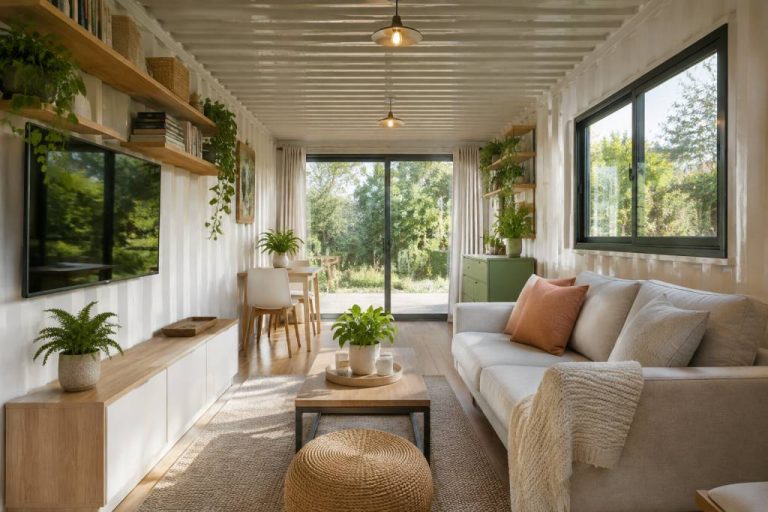
At first glance, a Georgian estate and a container home have little in common. One is a historic country residence; the other is a modular building system based on a steel shipping container. Yet both make the same basic demand of a designer: the structure must suit its use, climate and maintenance plan.
Shipping containers are designed for transport, not for comfortable occupation. Their steel walls conduct heat readily, so insulation and condensation control need to be resolved from the start. Cutting openings for windows or joining containers also affects structural performance and should be engineered, not improvised. A container project may be smaller than Woodside, but it is not automatically simpler.
The celebrity-home comparison is useful because it separates appearance from performance. A dramatic glass wall, a historic façade or an industrial steel finish can all look compelling. The more important questions are how the building handles heat, moisture, daylight, security and repair. In a container home, those questions become especially visible because steel, thermal bridging and limited interior depth leave less room for mistakes.
Before choosing a property or starting a build, owners can use a straightforward checklist:
-
What is the building’s actual structure, and which alterations will require specialist advice?
-
How will insulation, ventilation and moisture control work together?
-
Which maintenance tasks are the owner’s responsibility, and which are shared?
-
Does the plan account for collections, equipment or other uses that affect light and storage?
-
Can the design reduce energy demand through orientation, shading and an effective building envelope?
Fame aside, the house still has to work
Elton John’s homes attract attention because they are linked to a celebrated career, but their architectural interest is more grounded than the headlines suggest. Woodside demonstrates the demands of a historic estate. The Atlanta condominium shows how a high-rise can serve as a flexible base. The Beverly Hills property points to the opportunities—and energy challenges—of a warm-climate city home.
The most useful takeaway is that a home’s success depends on the fit between building and purpose. Land, privacy, shared services, environmental conditions and maintenance all shape how a property performs over time. Whether the project is a restored country house or a compact container dwelling, good design starts by answering those practical questions before the finishes and photographs.
À propos de l'auteur