Bob Dylan houses: a look at the homes that shaped his life and music
Bob Dylan’s biography is often told through songs, tours and changes of name. His homes offer another way to follow the story: from a small Midwestern town to Minneapolis student housing, New York’s crowded folk scene and the wooded hills of upstate New York. These places did not simply provide a backdrop. They shaped the practical conditions in which he listened, wrote, rehearsed and worked.
There is an important caveat for anyone tracing the addresses. Dylan has guarded his privacy for decades, and popular accounts sometimes blur confirmed residences, temporary lodgings and places he visited. The homes below are best understood as landmarks in a working life, not as a complete or definitive property record.
Hibbing: a modest house in a mining town
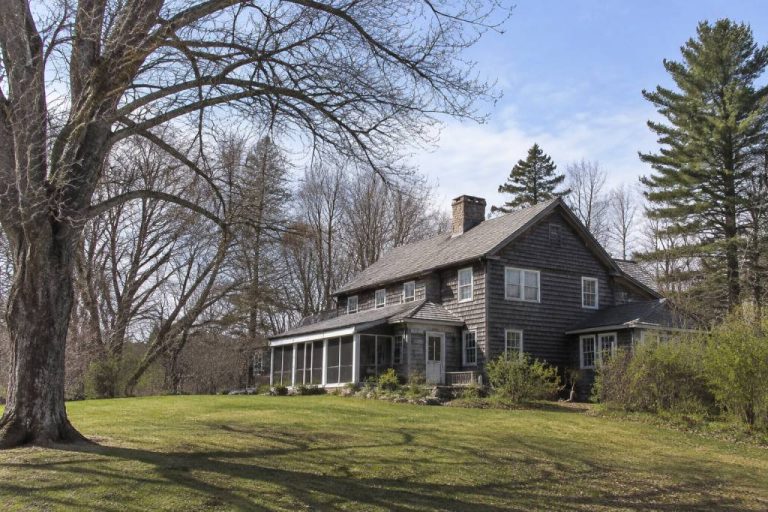
Dylan was born Robert Zimmerman in Duluth, Minnesota, in 1941. When he was young, his family moved to Hibbing, an iron-mining town on the Mesabi Range. The Zimmerman family home at 2425 Seventh Avenue East is a conventional, wood-frame house—not an architectural experiment, and not a remote artist’s retreat. Its significance lies in the setting around it.
Hibbing was a working community whose daily life was linked to mining, industry and the long winters of northern Minnesota. Dylan grew up in a place with a strong local identity but far from the major music centres that would later define his career. Radio, records and touring performers supplied connections to a larger world. The distance between a small-town house and the national music scene was real, even if a young listener could cross it imaginatively through a song.
For an architect or builder, the house is a reminder that cultural influence is not always housed in an exceptional building. The surrounding town, its economy and its transport links can matter more than an unusual plan or expensive material. Hibbing was not a designed retreat for a future star; it was a family home embedded in an industrial landscape.
It is also worth resisting the temptation to claim that a particular room or view directly produced a particular lyric. Dylan’s early influences were broad, and the evidence does not support reducing his songwriting to one childhood address. The house gives useful context, not a complete explanation.
Minneapolis: student rooms and a growing musical life
In 1959, Dylan enrolled at the University of Minnesota in Minneapolis. He lived in student accommodation and spent time in the city’s Dinkytown district, where cafés, bookstores and inexpensive rooms brought students and musicians into close contact. His time at the university was brief, but Minneapolis mattered as a place where he could hear folk music and begin performing in public.
Dinkytown’s importance was practical. A young musician did not need a purpose-built studio to develop a set: a room to sleep in, a venue that would offer a stage and an audience willing to listen could be enough. Informal networks did much of the work that institutions might do elsewhere. Dylan encountered the music of artists such as Woody Guthrie and began shaping a repertoire that drew on older folk and blues traditions.
Accounts of his early Minneapolis years sometimes make the rooms sound more fixed and well documented than they are. He moved between student housing and other lodgings, and the surviving record does not provide a reliable architectural tour of every place he stayed. What can be said with confidence is that his life there was more transient than domestic: study, music and a growing determination to leave for New York mattered more than establishing a permanent home.
That pattern is familiar to anyone who has worked in a creative field on a limited budget. The useful space is not necessarily the largest or best equipped. It is the one that puts the person within reach of collaborators, venues and ideas.
New York: the city as a shared workspace
Dylan arrived in New York in January 1961, travelling from Minnesota to meet Woody Guthrie and enter the folk scene. He stayed in inexpensive rooms and apartments, including addresses in Greenwich Village often associated with his early years in the city. One frequently cited address is 161 West Fourth Street, a rooming house where he is reported to have stayed. Such addresses should be treated as temporary lodging, not as a grand, settled Dylan residence.
Greenwich Village was a dense creative environment. Coffeehouses, small performance spaces, record shops and crowded flats were close together. Musicians could hear one another, trade songs and find work without crossing a large city. In building terms, this was less about private acoustic perfection than proximity: the neighbourhood itself functioned as a network of rehearsal rooms, stages and meeting places.
Dylan’s early New York life was financially modest. A rented room could offer little more than a bed and a place to keep belongings. The value came from what was outside the door. His performances at venues such as Gerde’s Folk City helped him build a reputation, while contacts in the folk community connected him to record companies and journalists.
The city also changed the way he could work. In Hibbing, his musical world had been shaped largely by listening and local performance. In New York, he was surrounded by working musicians and a fast-moving audience. The transition from private practice to public performance was not simply a career change; it was a change in the spaces available to him.
Woodstock: a retreat, a family home and a recording story
By the mid-1960s, Dylan and his family were closely associated with the Woodstock area of New York State. The region offered a sharp contrast to Manhattan: wooded hills, smaller settlements and more room for family life. Dylan’s association with Woodstock is often discussed alongside the large house known as Big Pink, but the distinction matters.
Big Pink, at 56 Parnassus Lane in nearby West Saugerties, was rented by members of the Band, including Rick Danko, Richard Manuel and Garth Hudson. Dylan visited and worked with them there. The house’s basement became the setting for the informal recordings later known as the Basement Tapes. It was not Dylan’s family home, and describing it as his residence confuses a creative meeting place with a private address.
The building itself was a large, ordinary house rather than a professional recording facility. Its basement offered shelter and a room where musicians could play without the routines of a commercial studio. The sound was shaped by the players, instruments, microphones and recording equipment—not by a purpose-designed acoustic system. That is part of the story’s appeal, but it should not be romanticised into a claim that any basement can deliver the same result.
For a home recording setup today, the lesson is more practical: a usable room needs enough space for people and equipment, reliable power, ventilation and some control over noise. A basement can help isolate sound from the street, but moisture, low ceilings and poor air quality can create other problems. Big Pink became historically important because of the people working there, not because its construction was a technical blueprint for a studio.
Woodstock also suited a period when Dylan’s public life was under intense pressure. A more rural setting offered distance from the pace of touring and media attention. The shift from city lodging to family life in a quieter landscape changed the balance between work and domestic space, even as music continued to be made nearby.
Malibu: the long-term California setting
Dylan’s life became increasingly connected with California, and he has been associated with homes in Malibu. Public reporting on his properties is less consistent than the accounts of his early career, so specific purchase dates, layouts and renovation histories should be treated cautiously unless supported by reliable property records. What is clear is that Malibu became part of his longer-term private life, rather than a brief stop on the route to another performance.
Malibu’s residential landscape is very different from Hibbing or Woodstock. Coastal homes must respond to steep sites, exposure to salt air, strong sun and, in some areas, wildfire risk. Those conditions have direct consequences for construction and maintenance. Exterior metals require protection from corrosion; glazing and shading affect heat gain; vegetation and access routes matter for fire safety. These are general requirements of the region, not claims about the details of Dylan’s private house.
The contrast is useful when looking at how a musician’s needs can change over time. Early rooms in Minneapolis and New York were defined by affordability and access to a scene. A more established home can provide privacy and continuity. The building’s role shifts from temporary base to protected domestic space, although the public record rarely reveals exactly how a private home supports its owner’s daily work.
There is also a common mistake in celebrity-home coverage: treating a famous address as if it were a public museum. Dylan’s residences are private homes, and architectural interest does not override that privacy. A responsible account sticks to verified, publicly reported information and avoids encouraging visits to private property.
What these homes reveal—and what they do not
Viewed together, Dylan’s homes show a sequence of changing needs. Hibbing provided a family setting in an industrial town. Minneapolis placed him near a young music community. New York supplied dense networks of venues and collaborators. Woodstock offered a quieter landscape where informal recording and family life could coexist. California represented a later, more private chapter.
The buildings themselves do not provide a simple formula for creativity. A small room may encourage focus, but it can also be uncomfortable. A rural house may offer privacy, but it can increase dependence on a car and make access to collaborators harder. A city apartment can place music within easy reach, while offering little room to work. The useful question is not “Which house made the music?” but “What conditions did each place make possible?”
For readers interested in architecture and alternative construction, Dylan’s story offers several practical points:
-
Start with use, not appearance. Sleeping, writing, rehearsing and recording have different spatial and acoustic needs.
-
Separate the building from the network around it. A modest room near venues may be more useful than a larger, isolated space.
-
Check the evidence before assigning a famous person to an address. A visit, a rental and a family residence are not interchangeable.
-
Consider climate and maintenance. Northern winters, urban density, woodland settings and coastal exposure create different construction demands.
-
Respect privacy. An influential building can be discussed without treating a private home as a tourist attraction.
Bob Dylan’s houses are not a neat architectural collection, and they were never designed as a public narrative. They are fragments of a working life: temporary rooms, family homes and places where musicians happened to gather. Their value lies in the way they help explain the practical settings behind a career that moved constantly between solitude and performance.
À propos de l'auteur