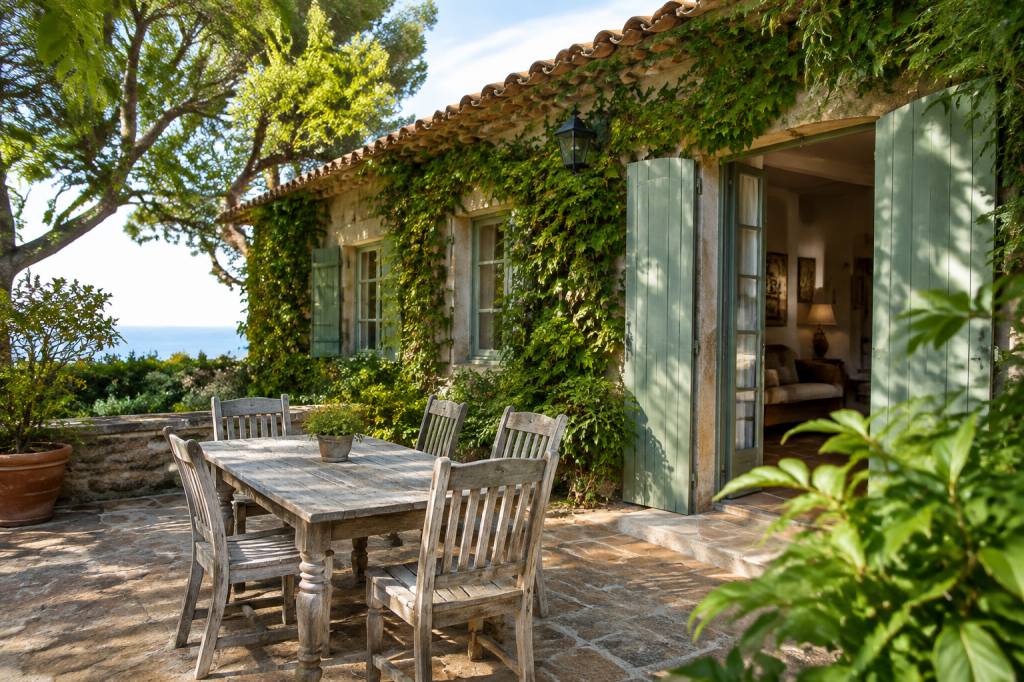
Brigitte Bardot’s home: inside the French icon’s historic residence
Brigitte Bardot’s home is often described as a private Mediterranean hideaway, but its importance goes beyond celebrity appeal. La Madrague, her residence on the coast at Saint-Tropez, became part of the public image of the French Riviera: a low-key seaside house set against the glamour of the town. It also offers a useful case study in how a home can acquire cultural significance without becoming a public building.
There is a practical limit to any “inside” account. La Madrague is a private residence, not a museum, and detailed, verified information about its rooms, construction and current condition is limited. The most reliable way to understand the property is to separate documented history from speculation, then consider the architectural ideas it represents: a close relationship with the landscape, a modest domestic scale and the lasting value of a well-sited home.
What La Madrague is—and where it stands
La Madrague is associated with the coastal area of Saint-Tropez, on the French Riviera. Bardot acquired the property in 1958, while her film career was at its height. The name is connected to a traditional Mediterranean fishing practice: a madrague is a type of fixed tuna trap. That local reference gives the house a stronger connection to the working coast than its later celebrity reputation might suggest.
The home is generally described as a seaside residence rather than a grand estate. Its setting is central to its appeal: the water, shoreline and vegetation form part of the experience of the property. In architectural terms, that relationship can matter as much as floor area or decorative detail. A view, a sheltered outdoor space and a route to the shore can shape how a house is used every day.
Descriptions and photographs of La Madrague are not a substitute for a measured survey. They do not establish the building’s exact floor plan, structural system or construction history. That distinction matters. Online accounts often repeat claims about celebrity homes without identifying where the information came from. A responsible account should not present inaccessible interiors or unverified room details as fact.
A home shaped by a particular moment
Bardot bought La Madrague during a period when she was one of France’s most recognisable actors. By choosing a private coastal house, she created a contrast with the public world of film premieres and press coverage. The residence became part of her personal story, but it was not designed to function as a tourist attraction or a public monument.
Saint-Tropez itself changed rapidly during the twentieth century. A port town with a strong maritime identity became an international destination, attracting visitors, artists and property buyers. A private home on the coast could therefore become a symbol of the place’s transformation. La Madrague is frequently invoked as an image of a more personal, less commercial Riviera, even though the area around it has since become closely associated with high-end tourism.
That transformation raises a familiar planning question: how can a coastal community accommodate new demand without losing the features that made it distinctive? In France, coastal development is subject to strict planning controls, including the national Coastal Law, known as the Loi Littoral. The rules restrict development in many shoreline areas and aim to protect landscapes and public access. The precise requirements depend on the site, local planning documents and the proposed work. A historic or well-known address does not automatically remove those obligations.
What can be said about the architecture?
Publicly available material supports a broad description of La Madrague as a low-rise Mediterranean home closely connected to its coastal setting. It does not justify a detailed architectural specification. Claims about exact room layouts, original materials, later extensions or structural alterations should be treated cautiously unless supported by plans, planning records or reliable first-hand reporting.
Still, the house is useful to consider through a few architectural principles common to coastal homes:
-
Orientation: The placement of openings and outdoor areas affects daylight, heat gain, wind exposure and views. On the Mediterranean coast, controlling summer sun is as important as capturing winter light.
-
Transition spaces: Terraces, shaded thresholds and gardens can extend the usable living area without adding enclosed floor space. They also help manage the shift between indoor and outdoor life.
-
Scale: A house that sits close to the landscape can feel more private and less imposing than a large building, even when it occupies valuable land.
-
Maintenance: Salt air, strong sunlight and seasonal storms place particular demands on paint, metalwork, glazing, fixings and external finishes.
These are general observations, not a claim that every feature has been confirmed at La Madrague. They are also practical lessons for anyone planning a coastal project. A beautiful sea view does not remove the need to deal with corrosion, overheating, drainage or privacy.
Why the setting matters as much as the building
Celebrity-home stories tend to focus on interiors: furniture, artwork and rooms. At La Madrague, the more reliable architectural story is the relationship between the home and its location. Coastal houses depend on a set of conditions that cannot be copied simply by choosing similar finishes. Topography, vegetation, access, neighbouring buildings and the orientation of the shoreline all influence the result.
For a new project, the site assessment should come before the choice of cladding or interior style. A designer needs to understand the sun path, prevailing winds, flood or erosion risks, local access and planning restrictions. On an exposed site, a sheltered courtyard may be more useful than a large expanse of glazing. A deep roof overhang or external shading can reduce summer heat more effectively than relying on air conditioning after the building is complete.
The lesson applies to modular and container construction, too. A shipping container can provide a compact structural shell, but it does not make a difficult coastal site simple. Steel is vulnerable to corrosion if coatings, cut edges and connections are not properly protected. Thermal bridging through the steel frame also needs careful design. A container home near the sea requires a full building-envelope strategy, not just a durable paint finish.
Privacy, access and the limits of the “inside” story
La Madrague remains a private residence. It should not be treated as a public attraction, and visitors should respect property boundaries and local access rules. The fact that a house is famous does not make its grounds or shoreline approaches freely accessible. In coastal France, public rights of way and private land can meet in complicated ways; visitors should follow signed routes and local guidance rather than relying on social media directions.
This privacy also explains why there is no dependable public tour of the home’s interior. Photographs circulated online may be old, miscaptioned or taken from outside the property. Without a clear source and date, an image cannot establish what the house looks like today. For an article about architecture, that is not a weakness to disguise. It is a boundary to state plainly.
It is possible to discuss the residence’s history and setting without turning private spaces into imagined content. That approach is useful well beyond celebrity architecture. Owners, designers and journalists all benefit when public information is distinguished from assumptions.
From personal residence to wider legacy
Bardot’s association with La Madrague is also linked to her work for animal welfare. The Brigitte Bardot Foundation, established in 1986, campaigns for animal protection and operates independently of the house as a physical building. The residence is often connected in public accounts with her commitment to animals, but it is important not to confuse the home with the foundation’s offices or assume that the property itself is open to visitors.
This gives the address a cultural meaning beyond architecture. A home can become a marker of a person’s changing priorities: in Bardot’s case, a shift from acting and public celebrity towards animal advocacy. The building’s significance therefore comes partly from the life associated with it, not simply from its construction or appearance.
For owners considering a house with a strong personal identity, this is worth noting. Buildings are not neutral backdrops. Their setting, use and public associations can shape how people understand them over time. But cultural value does not automatically mean a property should be converted into a museum. Conservation, privacy, access and ongoing maintenance all need to be considered together.
What a coastal home can teach a container builder
La Madrague is not a container house, and its known history should not be used to imply that it is. Its relevance to alternative construction lies instead in the design questions it brings into focus. A compact home can feel generous when it makes good use of its surroundings. A modest building can become memorable through siting and use rather than scale. And a coastal address demands technical decisions that are easy to overlook in attractive photographs.
For a container-based project near the sea, the early checklist should include:
-
Corrosion protection: Specify a coating system suitable for the exposure level, including treatment of welds, cut edges and concealed connections. Plan inspections and maintenance rather than assuming the steel is maintenance-free.
-
Thermal control: Design continuous insulation to limit thermal bridges through the frame. Select a build-up that manages condensation, and confirm the ventilation strategy for the completed dwelling.
-
Solar shading: Use orientation, external blinds, shutters, roof overhangs or planted shade to control summer gains. Glazing alone is not a cooling strategy.
-
Planning and foundations: Check local zoning, coastal restrictions, access requirements and geotechnical conditions before ordering or modifying a container.
-
Landscape and drainage: Protect existing vegetation where possible, manage runoff and consider erosion or flood exposure in the site design.
These measures are not specific to one famous address. They are the difference between a coastal concept image and a building that performs in real weather, complies with local rules and remains serviceable over time.
A historic home best understood with care
Brigitte Bardot’s La Madrague is compelling because it brings together a person, a place and a changing coastline. It is a private seaside residence acquired in 1958, not a documented public museum with an open interior. The safest account focuses on its known history, its connection to Saint-Tropez and the architectural questions raised by coastal living, while leaving unsupported details out.
For readers interested in construction, that restraint is useful. A famous house can inspire design thinking, but it cannot replace site surveys, planning research or technical specifications. The lasting lesson of La Madrague is less about copying a particular room than understanding how location, privacy, climate and use combine to give a home its character.
À propos de l'auteur